

FOR Energy business owners, contract managers, and project counsel
Separate the commercial promise from the insurance
An energy services agreement can allocate responsibility for injury, property damage, pollution, delay, and other losses. Insurance is only one component of that allocation. Begin by identifying what the business promises to do, what liabilities it accepts, and which obligations may remain uninsured.
Review the actual work scope and the parties performing it. A standard master agreement may be used for several very different assignments. The insurance analysis should reflect the project, location, and subcontracting arrangement rather than treating every contract issued by the same customer as equivalent.
Coordinate legal and insurance reviews
Indemnity, limitation of liability, consequential-loss waivers, and insurance provisions should be read together. Have qualified counsel assess enforceability under the relevant law and the potential effect of jurisdiction-specific restrictions. The broker can compare insurance requirements with proposed policy terms but should not replace legal advice.
Identify obligations involving pollution, professional services, downhole property, customer equipment, and loss of use. Ask whether the agreement transfers responsibility for another party’s conduct or for risks outside the contractor’s control. Document points requiring negotiation before pricing the job or mobilizing equipment.
Test each insurance requirement against evidence
Compare required lines, limits, insured parties, policy periods, and endorsements with the actual placement. Additional insured status and waiver provisions should be supported by policy language where required. A certificate is an evidence document, not a mechanism for rewriting coverage.
Review whether the contract expects completed-operations protection, specific cancellation notice, or a particular rating or insurer status. Requirements that cannot be satisfied should be identified clearly. Avoid issuing broad assurances that the insurance complies with an entire contract without a defined review of the relevant provisions.
Create a repeatable approval process
Use a responsibility matrix showing the clause, business owner, legal concern, insurance response, and unresolved issue. Establish which changes require management approval. Preserve the final executed contract and the insurance evidence used for the decision.
Revisit the review when scope changes, a project moves to another jurisdiction, or subcontracting expands. Claims often expose differences between the original insurance submission and the work actually performed. A practical contract process reduces those differences by connecting sales, operations, legal, finance, and the insurance team before commitments are finalized.
For recurring customers, retain a register of negotiated exceptions and verify that later work orders incorporate them as intended. A commercial team may assume a prior concession still applies even when the new document uses different language. Make responsibility for checking the executed version explicit and avoid relying on an unsigned draft as the basis for insurance decisions.
Questions for your next review
- Which contractual obligations are not supported by the proposed insurance?
- Has counsel reviewed the applicable indemnity and liability provisions?
- Does the final scope match the insurance information supplied?
Related Montridge webinars
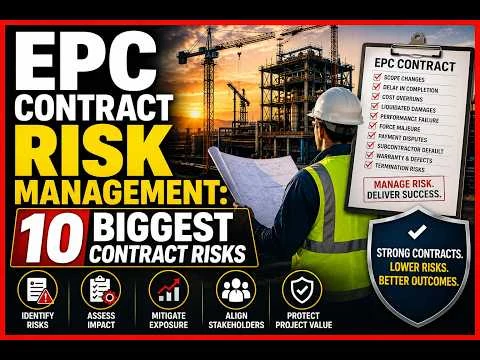
EPC, contracts and commercial coverage
EPC Contract Risk Management: 10 Biggest Contract Risks
Clicking Load video connects to YouTube. No player loads automatically.
Watch on YouTube ↗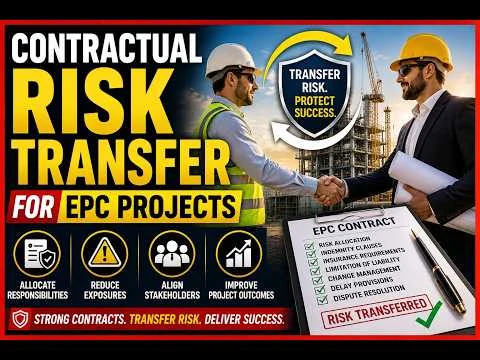
EPC, contracts and commercial coverage
Contractual Risk Transfer for EPC Projects
Clicking Load video connects to YouTube. No player loads automatically.
Watch on YouTube ↗Connect this topic to your program
Bring the operational details above into a coordinated review of your contracts, loss history and actual policy wording. Explore Montridge EPC insurance services for the related brokerage service.
Source references
Primary-source background informs the technical discussion. Insurance review questions are educational interpretation; a source link does not establish coverage or certify compliance.
Prepared November 1, 2026. Confirm current requirements and their application to your work before relying on them. Specific insurance outcomes require review of the complete policy and endorsements.