FOR Operators, hardware owners, tenants and technology asset managers
Identify whose equipment is at risk
Servers, accelerators, storage, network hardware and racks may belong to the operator, a tenant, a lessor or a financing entity. Record ownership and insurable interest alongside location and declared values. Include hardware in staging, integration and temporary storage areas.
The building owner's policy may not be intended to insure all customer equipment. Review leases, service agreements and customer insurance obligations before assuming otherwise. If the operator accepts custody or responsibility for another party's property, test that exposure under the actual relevant forms.
Distinguish hardware value from data and service value
A damaged server can generate repair cost, replacement cost, lost workload capacity, data restoration expense and customer claims. These are different interests. Review hardware valuation separately from electronic data, software, intellectual property and the economic value of an AI model.
Replacement estimates should address compatible hardware, installation, configuration and availability. Rapid product changes can affect what is commercially obtainable after a loss. Do not assume a property settlement funds the latest preferred technology or all work required to reproduce a computing environment.
Follow equipment through delivery and installation
High-value hardware may move through supplier premises, freight handling, warehouses and integration facilities before entering a live hall. Identify custody, risk of loss, packaging, security and receiving inspections. Clarify when transit protection ends and installation or operating protection begins.
Consider damage that becomes apparent only when equipment is energized or connected to cooling. Preserve shipping, inspection and test records. Vendor warranties, cargo arrangements and project property coverage can have different conditions and notification requirements; coordinate them before accepting equipment.
Review physical and cyber causes separately
Fire, liquid damage, electrical disturbance, accidental handling and malicious software can affect computing operations through different mechanisms. A shutdown does not by itself establish hardware damage. For each scenario, identify evidence, restoration tasks and potentially relevant policies.
Bring asset schedules, customer contracts, replacement assumptions and continuity plans into the program review. Include the time to reinstall and verify a usable environment. The insurance team should distinguish a physical damage recovery from a cyber recovery and from ordinary technology performance or obsolescence risk.
Questions for your program review
- Who insures customer and leased hardware?
- How are hardware, data and service losses valued separately?
- Where does transit protection transition to installation coverage?
Connect with existing Energy guidance
- Property Insurance for Energy Facilities
- Cyber Insurance & Operational Technology Risk
- Contractor Equipment & Inland Marine for Energy Work
Prepare for an Energy risk review, call 702-749-4369 or use the existing consultation link below.
Sources and verification notes
Technical and regulatory background is identified below. The loss scenarios and insurance review questions are educational analysis, not quoted policy terms, insurer approval or an indication of market access.
- Allianz Commercial — Data center construction risks ↗
2026-08-12. Insurer perspective on concentrated values and construction/operating interfaces; no Montridge market access is implied.
- FM — Data centers ↗
Undated; reviewed 2026-11-03. Engineering background on support systems, resilience and power dependencies. Product descriptions do not establish coverage for a reader.
Image identification
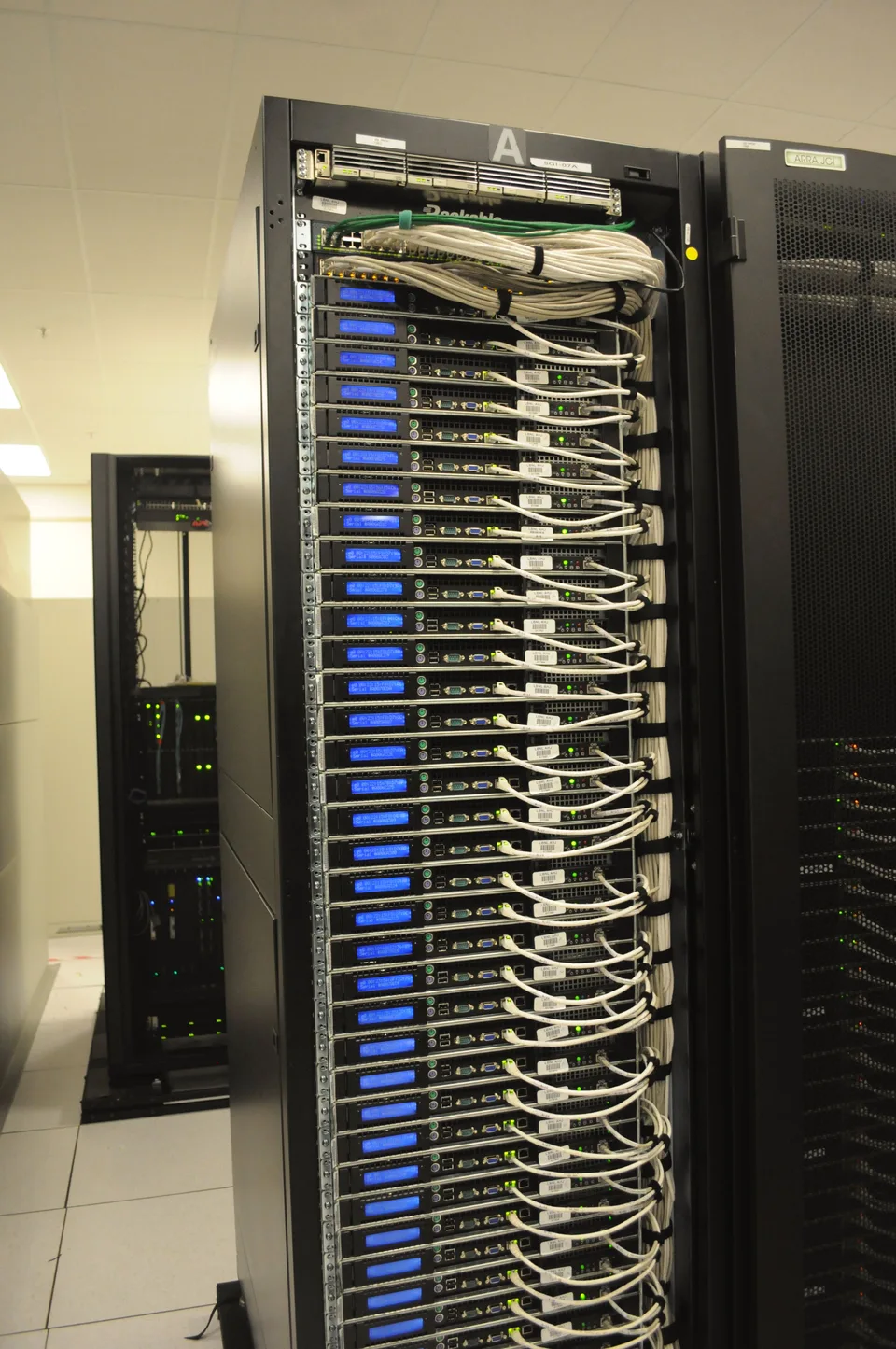
NERSC server rack, photographed in 2011; illustrative computing infrastructure. Derrick Coetzee · CC0 1.0. Historical research-computing equipment; not presented as a current AI accelerator installation. Image source and credit ↗ · License ↗.

Reviewed November 3, 2026. Requirements and project status can change. Confirm current applicability and complete policy wording before relying on this material.