
FOR Operators, HVAC contractors, mechanical engineers and commissioning teams
Describe the actual cooling architecture
Identify how heat moves from computing equipment to the final rejection system. A campus may use room-air systems, direct liquid cooling, rear-door heat exchangers or other arrangements. DOE's data center cooling resources describe water-efficiency and system options; suitability depends on the actual design.
List coolant distribution units, pumps, valves, piping, chillers, heat exchangers, towers and controls where present. Mark ownership boundaries between the operator, customer and mechanical contractor. A system name alone does not explain the liquid inventory or failure consequence near expensive electronics.
Review leaks and loss of cooling as different events
A leak can damage equipment, while a cooling outage can force shutdown without visible damage. Work through both scenarios. Identify detection, isolation, emergency shutdown, temporary cooling and safe restart decisions with qualified engineering advisers.
Ask how the policies treat liquid damage, equipment breakdown, contamination, undamaged property and interruption without physical damage. Customer equipment and the operator's own plant may be insured under different programs. A maintenance obligation or service warranty does not determine the insurer's response.
Examine contractor design and installation responsibilities
Mechanical scope can include engineering, equipment selection, water treatment, controls programming, installation and commissioning. Record delegated design and vendor reliance. A contractual capacity guarantee can exceed an obligation to perform professional services with reasonable care.
Review professional liability, general liability, pollution and construction property interfaces where relevant. Preserve pressure tests, flushing records, material compatibility decisions and acceptance documents. Use project-specific safety and quality procedures; this page does not prescribe a coolant or testing method.
Plan recovery under real operating conditions
Temporary cooling may depend on electrical capacity, water, access and compatible connections. Confirm practical deployment time before using it to reduce an interruption estimate. Include retesting, water quality verification and workload restart in the recovery plan.
Discuss water availability and discharge restrictions with environmental and utility advisers. A more efficient cooling design may change dependencies rather than remove them. Present the actual architecture, maintenance arrangements and contingency plan to the insurance team, including any first-of-a-kind equipment or unproven integration.
Questions for your program review
- Who owns coolant distribution equipment and connected customer hardware?
- Can cooling be lost without insured physical damage?
- Is temporary cooling compatible and deliverable?
Connect with existing Energy guidance
- Equipment Breakdown for Energy Systems
- Professional Liability for Energy Engineering & Technical Services
- Contractors Pollution Liability for Energy Projects
Prepare for an Energy risk review, call 702-749-4369 or use the existing consultation link below.
Sources and verification notes
Technical and regulatory background is identified below. The loss scenarios and insurance review questions are educational analysis, not quoted policy terms, insurer approval or an indication of market access.
- DOE FEMP — Cooling water efficiency for data centers ↗
Undated; reviewed 2026-11-03. Technical background on cooling towers, direct liquid cooling and water-efficiency considerations.
- FM — Data centers ↗
Undated; reviewed 2026-11-03. Engineering background on support systems, resilience and power dependencies. Product descriptions do not establish coverage for a reader.
Image identification
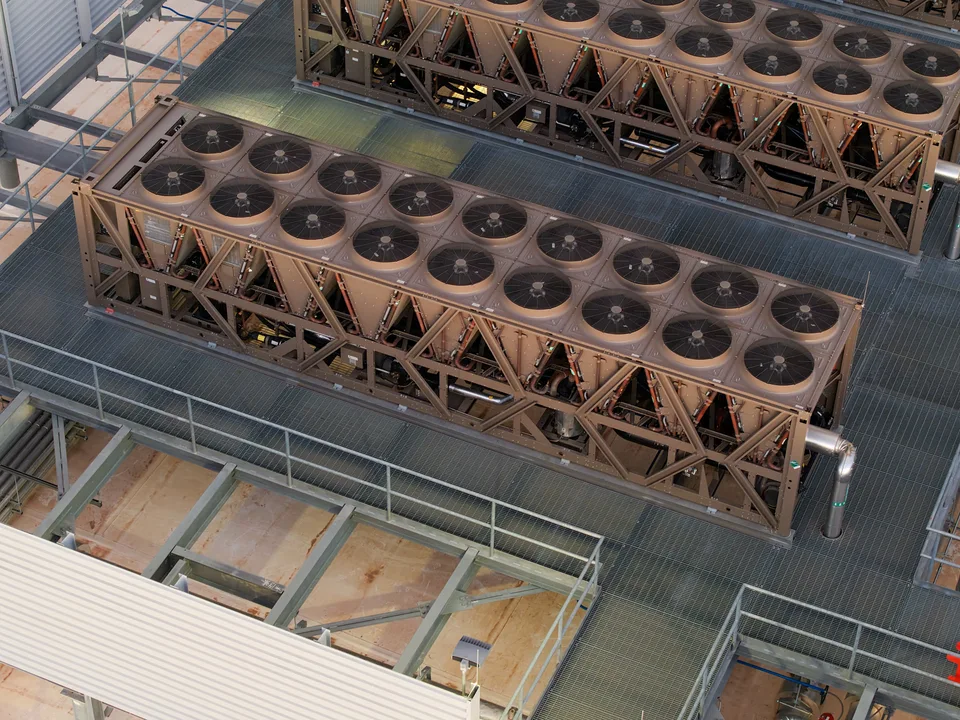
Data center cooling tower, Mesa, Arizona. Rsparks3 · CC0 1.0. Illustrative mechanical infrastructure; no affiliation is implied. Image source and credit ↗ · License ↗.

Reviewed November 3, 2026. Requirements and project status can change. Confirm current applicability and complete policy wording before relying on this material.