
FOR Commercial solar portfolio owners, asset managers and third-party operators
A portfolio is a collection of different obligations
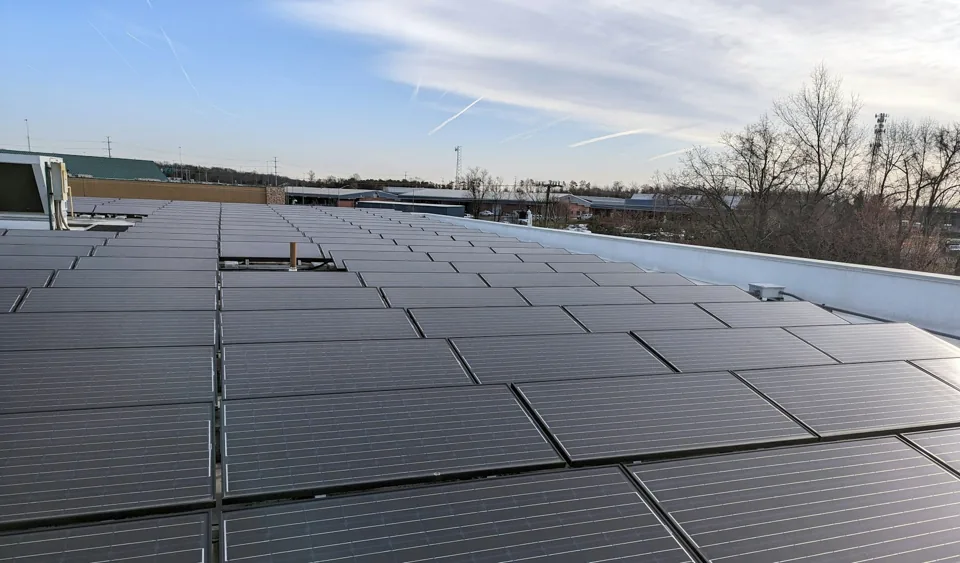
Commercial solar portfolios can include rooftop, carport and ground-mounted systems at buildings owned by unrelated hosts. Identify the legal owner of each array, the entity operating it and the host’s rights under the lease or power-purchase agreement. A consolidated asset value does not reveal who must repair a roof, remove panels or maintain access.
Maintain a site schedule with installation type, capacity, values, addresses and equipment ownership. Track acquisitions and newly commissioned systems promptly. The insurance review should address automatic-acquisition or reporting provisions under the actual forms, rather than assume every newly acquired site is immediately insured at its full value without notice.
The roof and array can suffer different losses
A roof leak may be alleged to result from installation, while a building fire can damage panels owned by a separate company. Review property interests, liability for damage to host property, and removal or reinstallation costs. The host’s building policy and the solar owner’s equipment policy may value or address those consequences differently.
Examine contractual waivers, additional-insured provisions, deductibles and responsibility for roof replacement unrelated to insured damage. A roof reaching the end of its useful life is not the same event as accidental damage to an array. Agree on access and repair coordination before a loss strands equipment on a building that the solar owner cannot independently restore.
Geographic diversity does not eliminate accumulation
Several small systems can share exposure to one hailstorm, wildfire event, equipment supplier or monitoring platform. Map portfolio concentrations and common components instead of treating each address as independent. Review event aggregation, occurrence definitions, catastrophe deductibles and any limits applying across multiple locations.
Business-interruption analysis should identify each site’s revenue terms and the dependencies that can delay restoration. Replacement inverters, host access or utility reconnection may govern downtime. Weather-related underproduction, degradation and a contractual output guarantee are not automatically covered property losses. Separate these commercial performance risks from income loss following the insured physical damage contemplated by the policy.
Keep operations data aligned with insurance records
DOE’s photovoltaic resources emphasize maintenance, performance monitoring and recovery planning. For insurance review, supply inspection records, documented deficiencies, roof condition information and response arrangements for small or remote sites. Explain whether the operator has authority to isolate equipment and how the host is contacted during an emergency.
Portfolio reporting should reconcile additions, disposals, value changes and major repairs with the insurer’s schedule. Retain commissioning files and installation warranties after an acquisition rather than assuming the seller will supply them during a claim. A consistent site-level record supports underwriting and loss adjustment while allowing the owner to identify exposures that cannot be treated uniformly across the portfolio. Keep host contact details current.
Operational exposures & coverage review
These review points are educational interpretation, not promises of insurance coverage.
| Exposure | Insurance review |
|---|---|
| Host-building interface | Coordinate roof, array, access and liability obligations. |
| Portfolio accumulation | Map event and equipment concentration across locations. |
| Site additions | Reconcile asset records and insurer reporting requirements. |
Questions for your next review
- Who pays to remove and reinstall panels after roof damage?
- How many sites can one catastrophe or supplier issue affect?
- Are newly acquired systems reported within policy conditions?
Related Montridge webinars
Solar and wind risk-management background for a distributed portfolio.
Renewables and battery storage
Renewable Energy Risk Management: The 10 Biggest Risks Facing Solar & Wind Projects
Clicking Load video connects to YouTube. No player loads automatically.
Watch on YouTube ↗Connect this topic to your program
Bring the operational details above into a coordinated review of your contracts, loss history and actual policy wording. Explore Montridge renewable energy contractor insurance services for the related brokerage service.
Source references
Primary-source background informs the technical discussion. Insurance review questions are educational interpretation; a source link does not establish coverage or certify compliance.
PV operations require maintenance, performance monitoring and a post-damage recovery plan.
Scope: United States; technical background and applicable federal framework · Source reviewed 2026-11-01
Large transformers can be difficult to transport and replace; equipment-specific procurement dependencies matter.
Scope: United States; technical background and applicable federal framework · Source reviewed 2026-11-01
Prepared November 1, 2026. Confirm current requirements and their application to your work before relying on them. Specific insurance outcomes require review of the complete policy and endorsements.