

FOR Renewable developers, EPC contractors and construction managers
Start with the construction sequence
Renewable construction combines civil works, electrical installation, long-distance equipment deliveries and a defined handover to operations. Map procurement, transit, storage, erection, testing, energization and acceptance for each work package. A solar block, wind turbine or storage enclosure may begin operating while other portions remain incomplete. The project insurance schedule should recognize these phases and the parties responsible at each one. Record temporary facilities and offsite storage locations as well as the final site so high-value equipment is not overlooked before installation.
Review the builders risk boundary
Ask how the proposed construction wording treats existing property, temporary works, defective design or workmanship, testing, commissioning, collapse and weather damage. Compare exclusions and resulting-damage provisions rather than relying on the policy title. Determine whether equipment values include freight, duties, installation and replacement at current prices. Identify supplier premises and any territorial restrictions on transit. Where marine cargo and construction policies meet, establish a clear transfer point. A certificate or purchase order may describe responsibility without establishing that the corresponding insurance has been arranged.
Assess delay and contract exposure
Delay in start-up protection, where offered, requires careful review of the insured event, waiting period, critical path and income basis. Ordinary scheduling problems, performance deficiencies and contractor default should not be assumed covered. Review liquidated damages, warranties, indemnities and limitation-of-liability clauses alongside the insurance provisions with legal counsel as needed. A long-lead transformer or turbine component can affect the entire project schedule. Identify alternatives that would actually be available after a loss and document who pays for acceleration, temporary equipment and repeat testing.
Consider equipment delivered months before the scheduled installation date. Determine who has title, where it will be stored, what protection arrangements apply and whether the declared construction policy includes that location and period. Repeat the exercise when a partially completed block begins generating revenue. These are two common points where commercial responsibility and insurance timing can diverge. Written coordination among the owner, EPC contractor, logistics provider and insurers is more useful than assuming that the overall project completion date resolves the issue.
Create a defensible handover file
Maintain a values schedule, logistics plan, construction schedule, inspection records, change orders and acceptance certificates. Record first energization and partial completion rather than using a single projected completion date. Confirm responsibility for punch-list work and defects discovered after operational insurance begins. Contractors should disclose design services, professional subcontractors, crane operations, energized work and pollution exposures. Owners should coordinate lender requirements and project policy enrollment. The objective is a continuous, documented allocation of risk through construction and commissioning, subject to the terms each insurer actually accepts.
Questions for your next review
- When does risk transfer from cargo to construction and then operations?
- How does the program address testing and partial acceptance?
- Which uninsured delay obligations remain in the EPC contract?
Related Montridge webinars
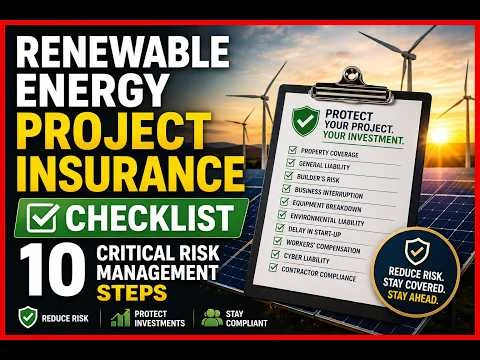
Renewables and battery storage
Renewable Energy Project Insurance Checklist: 10 Critical Risk Management Steps
Clicking Load video connects to YouTube. No player loads automatically.
Watch on YouTube ↗
Renewables and battery storage
Renewable Energy Contractor Insurance Requirements | What Solar & Wind Contractors Need to Know
Clicking Load video connects to YouTube. No player loads automatically.
Watch on YouTube ↗Connect this topic to your program
Bring the operational details above into a coordinated review of your contracts, loss history and actual policy wording. Explore Montridge renewable energy contractor insurance services for the related brokerage service.
Source references
Primary-source background informs the technical discussion. Insurance review questions are educational interpretation; a source link does not establish coverage or certify compliance.
Prepared November 1, 2026. Confirm current requirements and their application to your work before relying on them. Specific insurance outcomes require review of the complete policy and endorsements.