FOR Property owners, colocation operators, tenants and asset managers
Identify the interests behind the facility
The real estate owner, operating company and computing customer may be separate entities with different financial interests. Record who owns the shell, electrical plant, cooling equipment, racks and servers. Include leased assets and equipment purchased by an affiliate. Review named insureds and property descriptions against these interests.
Colocation agreements can divide responsibilities by rack, cage, hall or service. An operator may control environmental conditions without owning the affected hardware. Ask how customer property is treated under the applicable property and liability forms rather than assuming ownership of the building settles the issue.
Value recovery rather than the accounting record
An asset register is a starting point, but book value may not reflect replacement equipment, expedited logistics, installation and testing. Identify obsolete components, compatible substitutes and capacity constraints. Replacing a damaged component may require additional changes to a connected system; discuss valuation and code-related expense under actual policy terms.
Tenant equipment can change rapidly. Establish a practical process for reporting values, concentrations and changes in operations without collecting unnecessary confidential information. Clarify whether customers must maintain their own property and business interruption coverage and what evidence the operator can reasonably request.
Review bodily injury and third-party property separately
Visitors, maintenance contractors, deliveries, security and adjacent construction create liability exposures distinct from damage to the owner's own assets. Review access controls, contractor supervision, incident reporting and allocation of premises responsibilities between landlord and operator.
Service interruption may generate customer claims for pure financial loss, damaged equipment or alleged failure to provide a contracted service. These claims should be tested against liability and technology professional forms, contractual limitations and exclusions. A general liability certificate does not establish protection for every customer claim.
Keep leases and service commitments aligned
Compare property leases, operating agreements, customer contracts and equipment maintenance arrangements. Look for conflicting insurance requirements, waivers, indemnities, repair obligations and termination rights. An owner may be contractually obligated to restore a facility even when insurance proceeds are delayed or unavailable.
Use a worked loss scenario to determine who reports the claim, controls repairs, authorizes emergency spending and communicates with tenants. Separate expected service credits from potentially insured loss. Record any unresolved contractual obligation for legal and insurer clarification before renewal or contract execution.
Questions for your program review
- Whose property is insured and at what valuation?
- How is customer property in the operator’s custody treated?
- Who funds repairs while responsibility is disputed?
Connect with existing Energy guidance
- Property Insurance for Energy Facilities
- General Liability for Energy Operations
- Business Interruption & Energy Revenue Resilience
Prepare for an Energy risk review, call 702-749-4369 or use the existing consultation link below.
Sources and verification notes
Technical and regulatory background is identified below. The loss scenarios and insurance review questions are educational analysis, not quoted policy terms, insurer approval or an indication of market access.
- Allianz Commercial — Data center construction risks ↗
2026-08-12. Insurer perspective on concentrated values and construction/operating interfaces; no Montridge market access is implied.
- FM — Data centers ↗
Undated; reviewed 2026-11-03. Engineering background on support systems, resilience and power dependencies. Product descriptions do not establish coverage for a reader.
Image identification
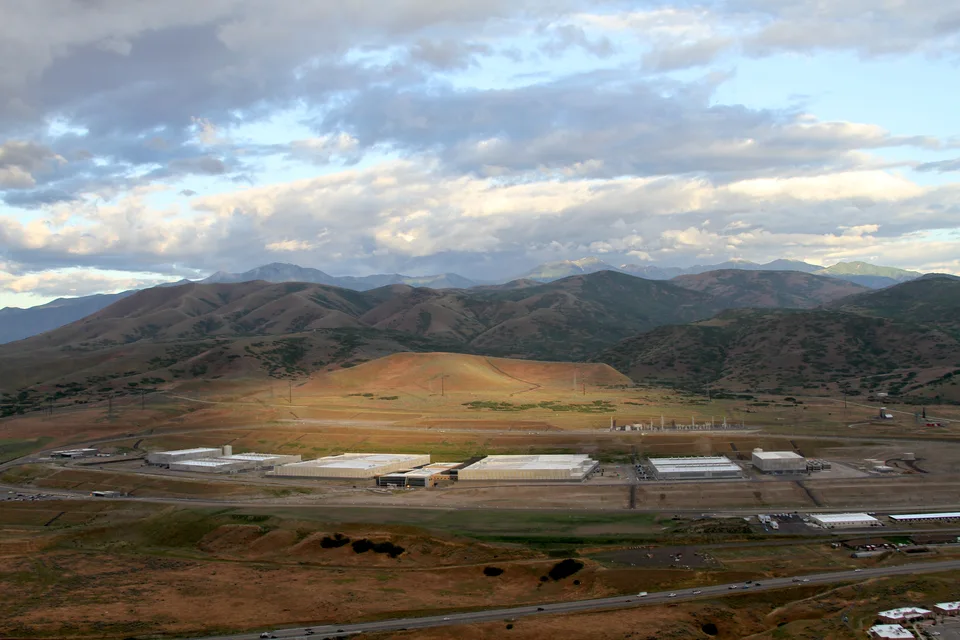
Utah Data Center, photographed in 2014; illustrative campus infrastructure. Parker Higgins / Electronic Frontier Foundation · CC0 1.0. This is a government data center, not identified as a commercial AI campus or Montridge client. Image source and credit ↗ · License ↗.

Reviewed November 3, 2026. Requirements and project status can change. Confirm current applicability and complete policy wording before relying on this material.