

FOR Energy contractors, operators, and contract managers
Begin with the work actually performed
An energy contractor’s general liability review should start with a description of each operation, not a broad label such as oilfield services. Excavation near an active line, valve replacement inside a refinery, electrical testing at a substation, and routine yard work present different loss scenarios. Record where work occurs, whether equipment remains operating, and who controls shutdown and isolation decisions.
Build a representative incident scenario for each service: damage to an adjacent asset, injury to a third party, or a defect discovered after handover. These scenarios help identify policy questions without presuming that every resulting loss falls within general liability.
Test the boundaries of the form
Review the insuring agreement alongside exclusions and endorsements addressing pollution, professional services, underground work, subsidence, marine exposures, and the insured’s own work or product. The relevance and wording of these provisions vary by policy. A description on an application does not override an exclusion attached to the contract.
Ask how the policy would treat property being worked on, property in the contractor’s care, and damage discovered after operations are completed. Distinguish a third-party damage allegation from the cost of correcting deficient work. Review defense provisions and whether defense spending affects available limits.
Connect operations with contract requirements
Compare owner and prime-contractor requirements with actual endorsements. Additional insured status, completed-operations requirements, primary and noncontributory language, and waiver requests require individual review. A certificate should summarize supported insurance facts; it should not be treated as the source of coverage.
Energy service agreements may also allocate liability through indemnity, consequential-loss waivers, and responsibility for downhole property or pollution. Have counsel assess enforceability and uninsured contractual obligations. The broker’s policy review and counsel’s contract review should address the same scope of work, locations, and legal entities.
Prepare a useful renewal submission
Provide a service-by-service revenue split, subcontracting arrangements, principal contracts, work locations, and an explanation of changes since the prior term. Include losses with corrective actions, rather than only a claim total. Describe welding, hot work, excavation, pressure testing, and energized operations precisely.
For a multi-entity organization, reconcile the named insured schedule with the entities signing contracts and performing work. Review limits across general liability and excess layers together. The objective is a documented placement decision with known gaps and retained obligations, not an unsupported assurance that all energy work is covered.
A useful workshop separates damage to the customer’s existing plant from damage to newly installed work and from lost production without accompanying damage. These categories can generate different policy questions. Record the contract language and factual assumptions beside each scenario so that the review can be revisited when a new project changes the work, customer, or location.
Questions for your next review
- Which exclusions affect our highest-severity operations?
- Does completed-operations protection match our contract obligations?
- Are the contracting and operating entities properly identified?
Related Montridge webinars
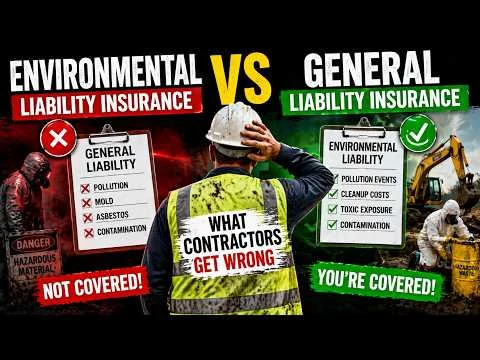
Pollution and environmental risk
Environmental vs General Liability Insurance (What Contractors Get Wrong)
Clicking Load video connects to YouTube. No player loads automatically.
Watch on YouTube ↗Connect this topic to your program
Bring the operational details above into a coordinated review of your contracts, loss history and actual policy wording. Explore Montridge energy services insurance services for the related brokerage service.
Source references
Primary-source background informs the technical discussion. Insurance review questions are educational interpretation; a source link does not establish coverage or certify compliance.
Prepared November 1, 2026. Confirm current requirements and their application to your work before relying on them. Specific insurance outcomes require review of the complete policy and endorsements.