FOR BESS developers, asset owners, integrators and service contractors
Describe the complete storage system
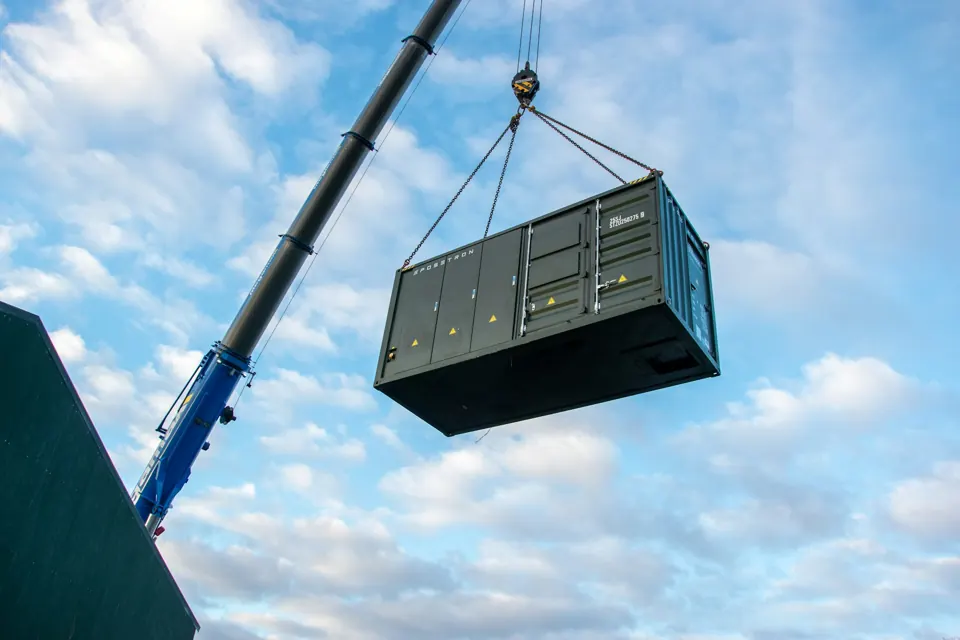
A battery energy storage submission should identify chemistry, manufacturer, module configuration, system capacity, enclosures, spacing and the associated inverters, transformers and controls. Distinguish standalone storage from a system integrated with solar, wind or an industrial facility. EPA identifies safe installation and incident response as important BESS considerations. Provide the engineering and testing documentation actually applicable to the installation rather than making a broad statement that all batteries carry the same risk. Identify whether used, repurposed or replacement modules are part of the project.
Review fire and contamination consequences
Evaluate a plausible failure involving one enclosure and the possibility of damage to adjacent units or third-party property. Ask how proposed insurance treats thermal events, smoke, firefighting water, contamination, debris removal and disposal of damaged batteries. Review exclusions, sublimits and deductibles with the system layout in hand. Include access for emergency responders and the process for taking equipment out of service. Insurance guidance cannot establish safe separation distances or response tactics; qualified engineers, responders and the applicable authorities must address those project-specific decisions.
Clarify warranties and operational income
Battery degradation, capacity retention, dispatch performance and physical damage are different issues. Compare the manufacturer warranty, integration contract and insurance wording without treating one as a substitute for another. Explain the revenue sources, including energy trading, capacity arrangements or services, so an interruption calculation reflects the actual business. Review the damage trigger, waiting period and repair assumptions. Replacing a failed component can require firmware compatibility, testing and recommissioning; an equipment delivery date alone may not represent the date revenue can resume.
For an illustrative loss review, assume one enclosure is damaged and neighboring units are isolated pending investigation. Ask separately about the damaged unit, undamaged units taken offline, replacement testing and the expense of safe removal. The answers may differ across property, interruption and pollution sections. Keep incident-response planning with qualified specialists, while ensuring the insurance team understands the expected sequence. A declared equipment value alone will not explain all of these costs or establish that each is within the policy.
Prepare the underwriting discussion
Collect design drawings, commissioning reports, maintenance procedures, alarm and monitoring descriptions, emergency plans and loss history. Identify who can remotely change settings and how access is controlled. For integrators and contractors, disclose design responsibility, installation scope, software services and the owner’s acceptance criteria. Review transit, storage, installation and operating coverage at each handoff. Document the route for removal and disposal of damaged units before a loss occurs. A well-defined submission helps separate property, pollution, professional and cyber questions that might otherwise be hidden within a single project description.
Questions for your next review
- How are damaged batteries, contaminated water and debris disposal addressed?
- Who bears integration and software configuration responsibility?
- What testing is required before replacement equipment can return to service?
Related Montridge webinars
Renewables and battery storage
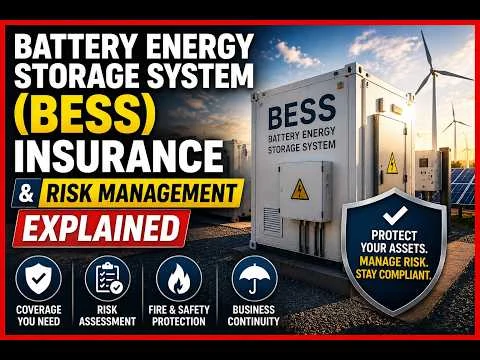
Battery Energy Storage System (BESS) Insurance & Risk Management Explained
Clicking Load video connects to YouTube. No player loads automatically.
Watch on YouTube ↗Connect this topic to your program
Bring the operational details above into a coordinated review of your contracts, loss history and actual policy wording. Explore Montridge renewable energy contractor insurance services for the related brokerage service.
Source references
Primary-source background informs the technical discussion. Insurance review questions are educational interpretation; a source link does not establish coverage or certify compliance.
Prepared November 1, 2026. Confirm current requirements and their application to your work before relying on them. Specific insurance outcomes require review of the complete policy and endorsements.