
FOR Pipeline welding firms, construction contractors and pipeline owners
Identify the weld scope and acceptance process
Pipeline welding may involve new construction, tie-ins, repairs or work near operating facilities. The insurance submission should identify the product transported, materials, methods, working conditions and role of subcontractors. A shop fabrication operation and field work on an existing system can present substantially different exposures.
Clarify who develops procedures, qualifies personnel, inspects the weld and authorizes acceptance. PHMSA’s construction inspection information identifies welding procedures, qualifications and nondestructive testing as relevant subjects for regulated pipelines. That does not mean a contractor’s inspection certificate establishes insurance coverage or transfers all responsibility to the inspector. Contract documents should distinguish execution, examination and engineering decisions.
Separate defective work from resulting damage
A rejected weld may require cutting out, rework and repeat testing before the line operates. A later failure may also damage other property, release product or interrupt service. Review these sequences separately when assessing general liability, completed operations, project property and pollution insurance.
The cost of correcting the contractor’s own defective work may be treated differently from consequential physical damage. Examine damage-to-work and property-in-care provisions, testing restrictions, contractual liability and the period for which completed-operations protection is maintained. Do not assume a high liability limit pays every repair or shutdown invoice, especially where the demand arises from a performance warranty without an otherwise covered event.
Address hot work and operating-system interfaces
Field welding can expose nearby property to ignition and introduces additional concerns when the work involves an existing system. Identify who controls isolation, gas-free verification, permits and restart. These responsibilities should be established by qualified operating personnel and reflected accurately in the contractor’s declared scope.
Where a service includes engineering, inspection or advice, review professional liability separately. Pollution allegations may arise after a release even when the initial cause is said to be a weld defect. Compare contractor and operator programs without assuming that one party’s policy protects every other participant. Review indemnities and additional-insured provisions against the actual allocation of responsibility.
Retain the traceability needed after handover
A focused submission includes contracts, payroll, project types, procedures, quality controls and loss experience. Explain how weld identifiers, personnel qualifications, consumables, inspection results and repair records remain connected to the installed location. Records should be usable after the project team disperses and after the pipeline changes ownership. Identify who keeps the final weld map and how copies are transferred.
Before a contract closes, confirm the duration and scope of required completed-operations coverage and whether future policy changes could affect continuity. Preserve evidence promptly if a defect is alleged; a repair may remove the physical material needed to investigate causation. The insurance review should support a clear response to both an immediate rejected weld and a later allegation involving a completed segment.
Operational exposures & coverage review
These review points are educational interpretation, not promises of insurance coverage.
| Exposure | Insurance review |
|---|---|
| Pre-service rejection | Distinguish rework from insured damage. |
| Latent failure | Review completed operations and pollution interfaces. |
| Traceability | Link each weld to procedures, personnel and inspection. |
Questions for your next review
- Who authorizes acceptance and restart?
- How long must completed-operations protection continue?
- Can a disputed weld be traced to its original records?
Related Montridge webinars
EPC contractual risk allocation for specialist pipeline work.
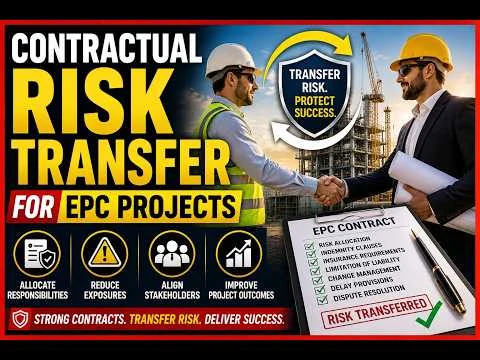
EPC, contracts and commercial coverage
Contractual Risk Transfer for EPC Projects
Clicking Load video connects to YouTube. No player loads automatically.
Watch on YouTube ↗Connect this topic to your program
Bring the operational details above into a coordinated review of your contracts, loss history and actual policy wording. Explore Montridge EPC insurance services for the related brokerage service.
Related specialty resource: Montridge Construction Insurance Resource Center. Related construction delivery, contractor and contractual risk resources.
Source references
Primary-source background informs the technical discussion. Insurance review questions are educational interpretation; a source link does not establish coverage or certify compliance.
PHMSA describes facility and construction inspection subjects, including welding, testing and LNG operations.
Scope: United States; applicable federal/state pipeline and LNG jurisdiction · Source reviewed 2026-11-01
PHMSA describes integrating assessment data, identifying threats and selecting integrity actions.
Scope: United States; regulated pipelines, applicability depends on system · Source reviewed 2026-11-01
Prepared November 1, 2026. Confirm current requirements and their application to your work before relying on them. Specific insurance outcomes require review of the complete policy and endorsements.