
FOR Energy borrowers, project finance teams, asset owners and lenders’ advisers
Treat the insurance schedule as part of the financing
Energy financing documents may specify insurance types, limits, deductibles, insurer qualifications, evidence and lender interests. Review those requirements while terms can still be negotiated. A generic certificate supplied shortly before closing may reveal conflicts too late for an efficient solution. The borrower, broker, counsel and lender's insurance adviser should work from the same current schedule.
The DOE's historical lending reference guide identifies insurance advisory work within project-finance due diligence; it does not prescribe a universal set of insurance requirements. Private and public financing arrangements differ. Determine what the actual lender requires and distinguish a negotiated covenant from a law or standard policy feature. Do not assume prior acceptance on another project establishes acceptance here.
Match lender interests to the relevant coverage
A lender's interest in physical assets, liability protection and project revenue involves different policy provisions. Review loss-payee or mortgagee interests, additional-insured requests and any assignment or proceeds-control requirements in the context of the particular coverage. Those terms should not be treated as interchangeable endorsements.
For an illustrative property loss during construction, determine who receives or controls proceeds, who authorizes rebuilding and what conditions affect debt-service or delay recovery. A lender may accept a certificate while a required endorsement remains unresolved. Obtain the actual issued wording and document any approved exception. The policy's coverage is not expanded simply because the borrower promised broader protection in a credit agreement.
Examine the mismatch between cash flow and insurance recovery
A project may depend on a single major component, a narrow commissioning window or a limited group of customers. Insurance review should test physical-damage interruption and delay scenarios against the revenue and debt-service model. Review waiting periods, indemnity periods, sublimits and declared values without assuming they match the lender's financial assumptions.
Market prices, customer default, permitting delays and failure to meet performance guarantees may impair repayment without triggering the property program. Identify those risks explicitly. A lender covenant requiring coverage does not make unavailable insurance available or transform an uninsurable promise into a policy benefit. Where a requirement cannot be met, the project needs a documented commercial decision or waiver before relying on the financing structure.
Manage compliance after the loan closes
Create a schedule of renewal dates, evidence requirements, approved deductibles, notices and outstanding exceptions. Assign responsibility for informing the broker and lender when the project changes ownership, adds capacity, modifies contracts or moves from construction to operations. Track policy endorsements as well as certificates, because the former determine the issued terms.
Provide project contracts, asset values, financial models and the lender's proposed insurance wording early in the placement process. Keep written records of accepted deviations and the authority granting them. Review cancellation and material-change notice provisions as actually available under the policy rather than guaranteeing a notice period the insurer has not accepted. Ongoing coordination reduces covenant surprises without implying that lender approval certifies the adequacy of the entire insurance program.
Operational exposures & coverage review
These review points are educational interpretation, not promises of insurance coverage.
| Exposure | Insurance review |
|---|---|
| Policy evidence | Obtain endorsements rather than relying only on certificates. |
| Financial model | Compare revenue and debt-service assumptions with insured triggers. |
| Covenant changes | Track waivers, renewal evidence and construction-to-operation transition. |
Questions for your next review
- Which requirements are contractual and which have actually been endorsed?
- Who controls claim proceeds and rebuilding decisions?
- Are unavailable or unmet requirements documented before closing?
Related Montridge webinars
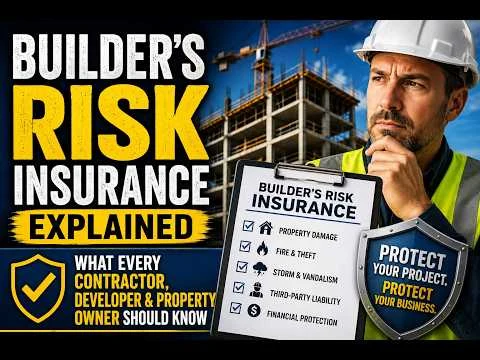
Builder’s risk review relevant to lender-financed construction.
EPC, contracts and commercial coverage
Builder's Risk Insurance Explained: What Every Contractor, Developer & Property Owner Should Know
Clicking Load video connects to YouTube. No player loads automatically.
Watch on YouTube ↗Connect this topic to your program
Bring the operational details above into a coordinated review of your contracts, loss history and actual policy wording. Explore Montridge energy services insurance services for the related brokerage service.
Source references
Primary-source background informs the technical discussion. Insurance review questions are educational interpretation; a source link does not establish coverage or certify compliance.
Historical DOE lending guide identifies insurance advisory work within project financing due diligence. It is not used for current loan eligibility, pricing or capacity.
Scope: U.S. DOE May 2022 historical financing-process background · Source reviewed 2026-11-01
Washington public-entity contracting manual explains claims-made timing, retroactive dates and reporting concerns. Not used as universal policy wording.
Scope: Washington state procurement guidance, August 2023 · Source reviewed 2026-11-01
Prepared November 1, 2026. Confirm current requirements and their application to your work before relying on them. Specific insurance outcomes require review of the complete policy and endorsements.