FOR LNG receiving-terminal owners, regasification operators and gas buyers
Distinguish the receiving arrangement
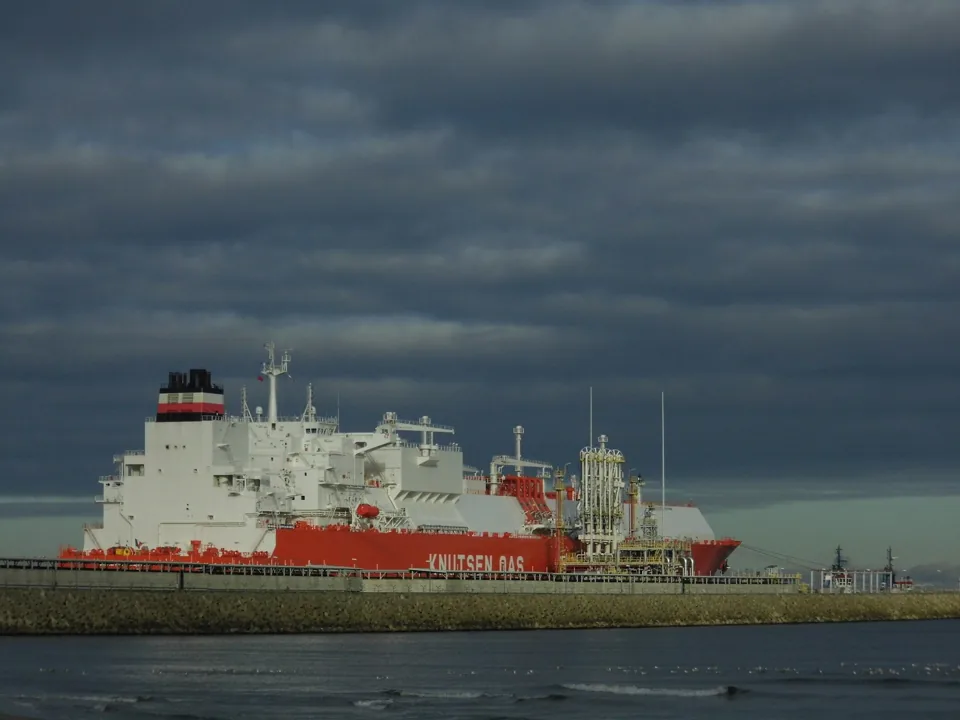
An import terminal receives LNG, holds it and returns it to gaseous form for delivery into the receiving system. Some arrangements are shore based, while others use a floating storage and regasification unit with substantial marine interfaces. The insurance submission should state the actual configuration rather than assume that all receiving terminals are buildings and fixed tanks.
Identify the owner, operator, vessel interests, gas owner and pipeline delivery counterparty. DOE’s value-chain material distinguishes regasification from liquefaction; the physical process and contractual responsibilities therefore differ from an export terminal. A terminal-use agreement should be read alongside the asset and revenue schedules to identify each party’s insured interest.
Follow an interruption from receipt to send-out
Damage to unloading equipment, storage systems, vaporization equipment or a shared utility may prevent the terminal from accepting or delivering product. Consider whether the facility can continue partial operations and whether alternative storage or send-out capacity is actually available. A vessel waiting offshore does not resolve a damaged shore connection.
Review property, machinery and business interruption terms against the actual failure and revenue model. Distinguish terminal fees, product interests, additional logistics costs and contractual demurrage or penalty demands. Those amounts may not share a coverage trigger. A shipment delay without insured physical damage should not be assumed to activate ordinary property-based interruption protection.
Coordinate fixed assets with vessel responsibilities
Where floating equipment is involved, separate hull and marine liabilities from the terminal’s fixed property and operational liabilities. Identify responsibility for moorings, transfer equipment, maintenance, navigation and emergency response. The contract should explain handoff points, but policy wording must be checked independently to determine which interests and activities are insured.
Review product custody, collision or contact damage, pollution allegations and third-party injury. Contractor work during a shutdown can introduce another insurance interface, particularly when testing or recommissioning changes the exposure. U.S. regulatory applicability depends on facility and activity; overseas arrangements require their own local review. Do not transplant one jurisdiction’s facility requirements into another country’s terminal program.
Prepare a realistic recovery and contract review
Provide configuration diagrams, ownership schedules, values, terminal-use agreements and equipment-maintenance information. Identify dependencies on power, seawater or other heating arrangements where relevant to the actual plant, and describe the receiving pipeline’s role. Explain any chartered vessel or specialist unit that cannot readily be replaced.
Assess how scheduled maintenance differs from an accidental outage and how customer obligations are measured during each. After an incident, preserve operating data, delivery records and notices so physical loss can be separated from unrelated supply disruption. The review should show the limits of each policy and contract rather than relying on a broad LNG label to imply complete protection across the import chain.
Operational exposures & coverage review
These review points are educational interpretation, not promises of insurance coverage.
| Exposure | Insurance review |
|---|---|
| Floating interface | Separate vessel interests from fixed terminal property. |
| Send-out failure | Trace utilities and downstream delivery dependencies. |
| Waiting cargo | Review product custody and contractual delay charges. |
Questions for your next review
- Is the receiving system shore based, floating or mixed?
- What physical event triggers interruption coverage?
- Who bears vessel waiting costs after terminal damage?
Connect this topic to your program
Bring the operational details above into a coordinated review of your contracts, loss history and actual policy wording. Explore Montridge energy services insurance services for the related brokerage service.
Source references
Primary-source background informs the technical discussion. Insurance review questions are educational interpretation; a source link does not establish coverage or certify compliance.
DOE distinguishes liquefaction, marine transport, storage and regasification in the LNG chain.
Scope: United States and international LNG value chain · Source reviewed 2026-11-01
DOE LNG value-chain fact sheet distinguishes export conversion and receiving-terminal functions.
Scope: Technical background; 2020 DOE publication · Source reviewed 2026-11-01
PHMSA describes facility and construction inspection subjects, including welding, testing and LNG operations.
Scope: United States; applicable federal/state pipeline and LNG jurisdiction · Source reviewed 2026-11-01
Prepared November 1, 2026. Confirm current requirements and their application to your work before relying on them. Specific insurance outcomes require review of the complete policy and endorsements.