

FOR Renewable owners, retrofit contractors and project managers
Distinguish retrofit from new construction
Repowering may replace turbine components, solar modules, inverters or controls while retaining foundations, cabling and other existing infrastructure. Establish the condition and remaining value of retained assets before work begins. Define which portions remain operational and which are under contractor control. DOE’s wind end-of-service guidance distinguishes decisions about end-of-life assets and their removal obligations; a repowering project needs its own asset and responsibility map. The insurance program should not assume that an operating policy automatically includes the entire alteration project.
Check the existing-property interface
Review how construction or installation coverage addresses damage to retained foundations, adjacent operating units and existing electrical systems. Determine whether removed equipment remains insured during storage, sale, transport or disposal. Ask about testing, faulty workmanship, design compatibility and resulting damage. A replacement component may perform differently within an older system; engineering approval and warranty arrangements should be documented. Identify who bears the cost if an apparently reusable part proves unsuitable after disassembly, recognizing that betterment or project scope changes may not be insured losses.
Model a realistic interruption
The planned outage is a project expense; an unexpected extension does not automatically become an insured business interruption claim. Review the physical damage trigger, waiting period, restoration assumptions and treatment of phased operation. Identify shared equipment whose shutdown affects more units than the work package suggests. Compare performance guarantees, power agreements and lender conditions with the proposed insurance. If the work creates a new operating configuration, update values and income projections rather than continuing the old schedule unchanged.
Consider a retrofit that leaves an existing foundation in place but increases the loads from new equipment. The engineering compatibility decision, damage during installation and later performance of the completed system are separate issues. Identify who makes each technical judgment and how acceptance is recorded. Review professional liability and construction terms accordingly. Also determine whether the old equipment will be sold, scrapped or retained as spares, because the insurance interest and declared values may change before the overall project is complete.
Preserve the condition and handover evidence
Collect pre-work inspections, engineering compatibility studies, replacement specifications, lifting plans, change orders and acceptance records. Clearly document the date and basis on which each unit returns to operational control. Review responsibility for salvaged components and environmentally appropriate disposal. Contractors should disclose work on energized adjacent systems, heavy lifts and any design responsibility. The final insurance review should address the existing plant, the new work and their interaction, with unresolved exclusions or contractual obligations recorded before mobilization rather than discovered during a claim.
Questions for your next review
- Which policy addresses damage to retained equipment during alteration?
- How is planned downtime distinguished from insured delay?
- When are revised values and operating characteristics reported?
Related Montridge webinars
Renewables and battery storage
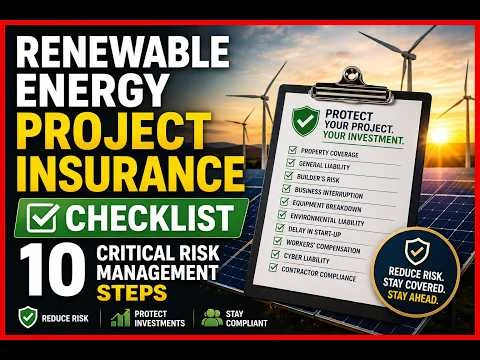
Renewable Energy Project Insurance Checklist: 10 Critical Risk Management Steps
Clicking Load video connects to YouTube. No player loads automatically.
Watch on YouTube ↗Connect this topic to your program
Bring the operational details above into a coordinated review of your contracts, loss history and actual policy wording. Explore Montridge renewable energy contractor insurance services for the related brokerage service.
Source references
Primary-source background informs the technical discussion. Insurance review questions are educational interpretation; a source link does not establish coverage or certify compliance.
Prepared November 1, 2026. Confirm current requirements and their application to your work before relying on them. Specific insurance outcomes require review of the complete policy and endorsements.