
FOR CFOs, operators, facilities leaders and insurance managers
Separate the damaged asset from the financial loss
A machinery failure can require repair and interrupt customer service, but the repair and time-element sections may have different conditions. Identify the failed component, cause, ownership and affected systems before discussing reimbursement. Equipment breakdown wording is not interchangeable with every cause covered by property insurance.
Compare actual forms for definitions, exclusions, deductibles, waiting periods and time limits. Distinguish deterioration, maintenance and design-performance issues from a covered damaging event. An engineer's description of a failure is essential evidence, but does not itself decide coverage.
Trace external utility dependencies
The campus can lose electricity, water, gas, communications or cooling support because of an event away from its premises. Review which services, property types, locations and causes are included in any applicable service interruption or dependent property provision.
Ask separately about physical damage, planned curtailment, supply shortage and administrative disconnection. A standard business interruption section should not be described as protection for every outage. The owner may retain substantial non-damage interruption risk even when backup systems are robust.
Measure the loss on the insured’s actual economics
An operator's loss of revenue, a tenant's lost computing capacity and an owner's lost rent are different exposures. Identify the insured entity, revenue stream, continuing expense and mitigation cost. Avoid adding the same loss under multiple categories or assuming customer service credits are insured income loss.
Prepare realistic restoration estimates incorporating replacement equipment, specialist labor, commissioning and tenant restart. Review how partial operations, alternative facilities and expediting affect the calculation. Document the difference between contractual availability promises and the recovery period recognized by the policy.
Use resilience to support an evidence-based review
Evaluate spare capacity, tested transfer procedures, maintenance access and alternative supply. A backup that has not been demonstrated under the relevant conditions should not be treated as a guaranteed reduction in loss. Keep assumptions visible and date engineering evidence.
Work through a transformer failure combined with a regional utility outage, then a cooling failure without hardware damage. Record which program might respond, what remains uncertain and what must be financed by the business. This combined guide avoids separate repetitive pages for breakdown, interruption and utility dependence.
Questions for your program review
- Which outage scenarios require damage to specified property?
- Whose income is insured and how is it measured?
- Can recovery exceed the selected indemnity period?
Connect with existing Energy guidance
- Equipment Breakdown for Energy Systems
- Business Interruption & Energy Revenue Resilience
- Electric Utility Insurance & Risk Management
Prepare for an Energy risk review, call 702-749-4369 or use the existing consultation link below.
Sources and verification notes
Technical and regulatory background is identified below. The loss scenarios and insurance review questions are educational analysis, not quoted policy terms, insurer approval or an indication of market access.
- FM — Data centers ↗
Undated; reviewed 2026-11-03. Engineering background on support systems, resilience and power dependencies. Product descriptions do not establish coverage for a reader.
- Allianz Commercial — Data center construction risks ↗
2026-08-12. Insurer perspective on concentrated values and construction/operating interfaces; no Montridge market access is implied.
Image identification
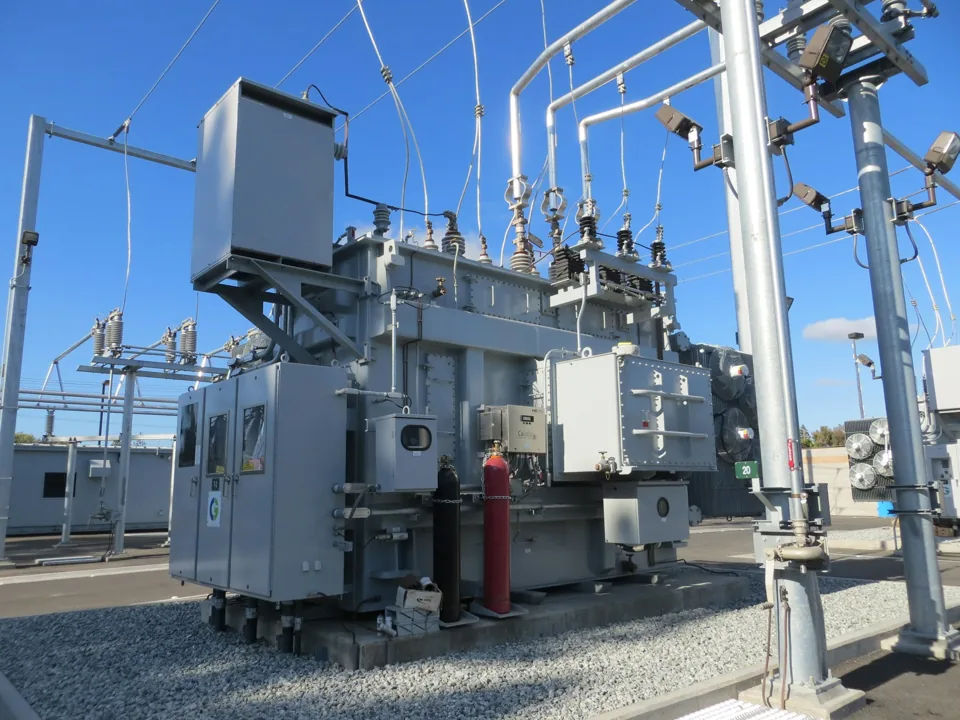
Electrical transformer at a Silicon Valley Power substation. Illustrative photography. American Public Power Association · Unsplash License. Illustrative infrastructure; no client relationship or endorsement is implied. Image source and credit ↗ · License ↗.
Reviewed November 3, 2026. Requirements and project status can change. Confirm current applicability and complete policy wording before relying on this material.