
FOR Operators, managed service providers, CISOs and risk managers
Map both information systems and facility controls
The data center's technology exposure can include business systems, customer services and controls for electrical, cooling and security equipment. Identify who operates each network and who has remote access. A controls incident can affect physical operations even when customer data is not stolen.
NIST's OT resources provide security background. As reviewed November 3, 2026, the listed SP 800-82 Revision 4 is an initial public draft, not a final standard. Use appropriate final guidance and qualified security advice for implementation rather than treating a website summary as a compliance certification.
Distinguish first-party response from liability
Cyber coverage may address specified response and interruption expenses under its own conditions. Technology professional liability concerns claims alleging failure of a defined service. General liability and property programs have different interests and exclusions. Determine which entities and services are actually insured.
Review a ransomware event, a misconfigured customer service, a cooling-control compromise and an accidental operator error separately. Do not assume one policy covers all four. A contract describing uninterrupted service or broad data indemnification can create obligations beyond verified policy protection.
Examine physical damage and interruption boundaries
A cyber event can stop operations without damaging hardware, or allegedly contribute to a physical loss. Compare cyber, property and equipment breakdown wording for exclusions, carve-backs and competing definitions. Identify how the claims teams will coordinate if the cause is initially uncertain.
Review outsourced providers, cloud dependencies, communications carriers and remote maintenance access. A provider outage may be subject to definitions, waiting periods and limits different from an event on the operator's own systems. Obtain evidence of the actual dependency rather than relying on a generic vendor list.
Keep incident and contract records ready
Maintain a response plan with authority to isolate systems, contact specialists, preserve evidence and notify insurers. Confirm approved vendors and consent requirements in actual policy wording before an emergency. Coordinate safety and operational decisions with the appropriate technical teams.
Review customer notification, service credits, liability caps and indemnities with counsel. Contractual penalties, service refunds and reputational loss should not be presented as automatically insured. Bring the service description and a worked incident scenario to the program review so gaps can be understood before commitments are made.
Questions for your program review
- Which entity and defined services are insured?
- How do cyber and property forms treat cyber-driven physical damage?
- Do customer obligations exceed the policy’s liability grant?
Connect with existing Energy guidance
- Cyber Insurance & Operational Technology Risk
- Professional Liability for Energy Engineering & Technical Services
- Contractual Risk Transfer in Energy Agreements
Prepare for an Energy risk review, call 702-749-4369 or use the existing consultation link below.
Sources and verification notes
Technical and regulatory background is identified below. The loss scenarios and insurance review questions are educational analysis, not quoted policy terms, insurer approval or an indication of market access.
- NIST — Operational technology security ↗
Reviewed 2026-11-03. OT security resources. Revision 4 of SP 800-82 is an initial public draft as listed in September 2026, not represented here as a final standard.
- Allianz Commercial — Data center construction risks ↗
2026-08-12. Insurer perspective on concentrated values and construction/operating interfaces; no Montridge market access is implied.
Image identification
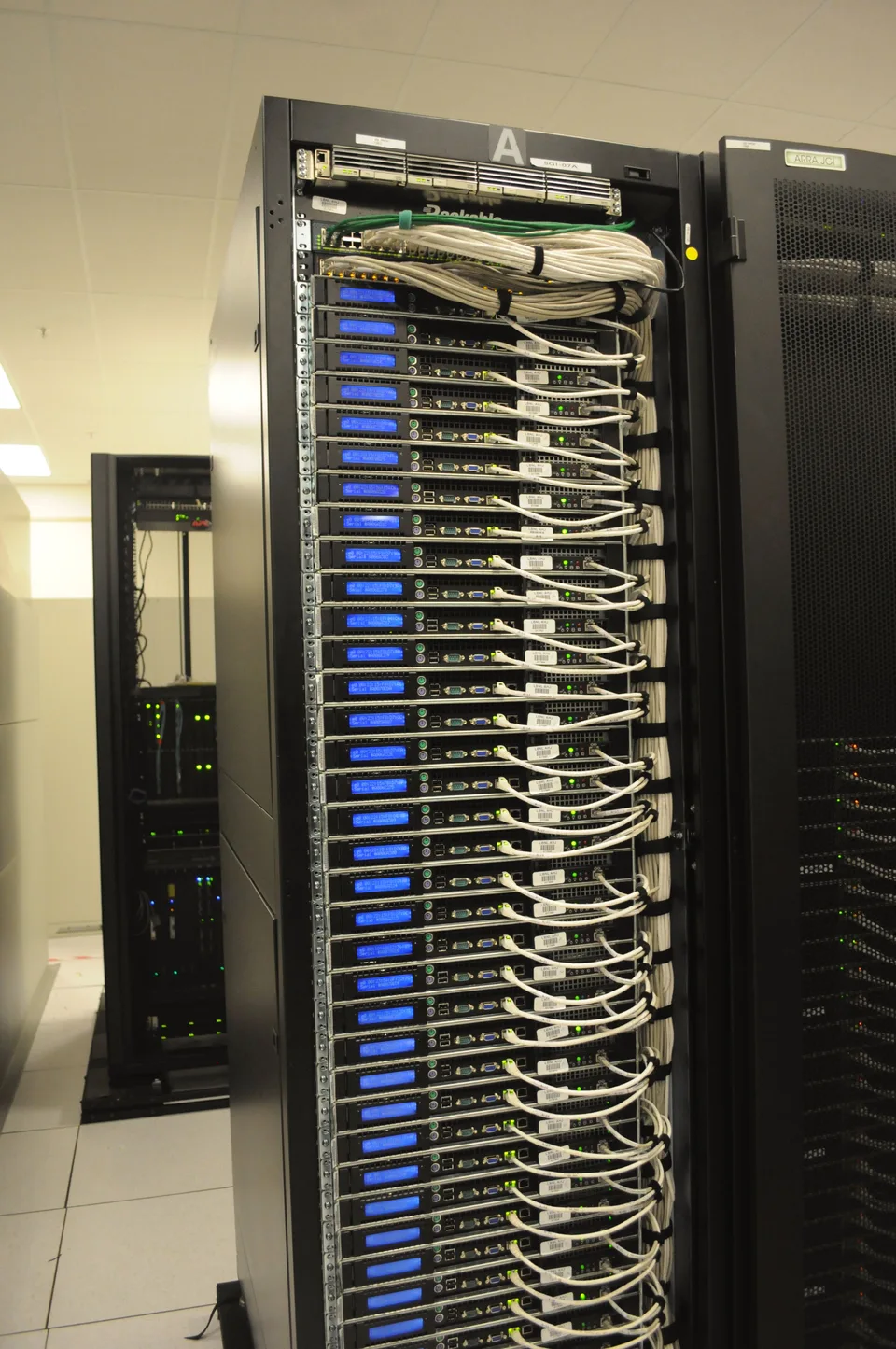
NERSC server rack, photographed in 2011; illustrative computing infrastructure. Derrick Coetzee · CC0 1.0. Historical research-computing equipment; not presented as a current AI accelerator installation. Image source and credit ↗ · License ↗.

Reviewed November 3, 2026. Requirements and project status can change. Confirm current applicability and complete policy wording before relying on this material.