
FOR Developers, operators, environmental contractors and risk managers
Inventory the environmental operations
A data center may contain fuel tanks, backup engines, batteries, cooling water systems, chemicals, refrigerants and construction-related exposures. Record quantities, locations, ownership and handling responsibilities. Include temporary systems and historical site conditions where relevant.
Do not assume every facility has the same water or fuel profile. Cooling architecture, climate, power strategy and local infrastructure affect the review. Ask qualified environmental advisers to identify applicable permissions and operating conditions for the actual site.
Keep water efficiency and water availability separate
DOE's cooling resources describe efficiency options, but lower consumption does not establish uninterrupted water supply or a right to discharge. Review supply agreements, restrictions, treatment, wastewater arrangements and the effect of a cooling outage on computing operations.
Work through a supply restriction without physical damage, an onsite pipe rupture and an accidental coolant release. These scenarios can produce different property, liability, pollution and interruption questions. A commercial water obligation is not itself an insurance coverage grant.
Review generation and storage permissions
Backup engines and routine power generation may face different requirements. EPA's stationary-engine resources are relevant background, not a determination that an individual installation qualifies for an emergency-use provision. Turbines require their own applicable regulatory assessment.
Document fuel delivery, tank inspection, spill response, waste handling and contractor responsibilities. For battery or emerging energy systems, obtain design-specific information rather than applying a generic pollution description. Environmental review should precede reliance on a proposed power strategy.
Compare pollution protection with the actual work
Review site pollution, contractors pollution, transport pollution and property programs where applicable. Identify insured locations, operations, covered conditions, retroactive dates, reporting requirements, exclusions and financial assurance obligations in the actual documents.
Cleanup at the insured site, third-party injury, emergency response and loss of revenue may have different treatment. Contractual remediation duties and regulatory financial assurance are not automatically satisfied by a pollution policy. Bring the site history, permits, inventories and representative contracts to a coordinated review.
Questions for your program review
- What water and discharge rights support the operating plan?
- Do permits match backup versus routine generation?
- Which pollution responsibilities remain with vendors and contractors?
Connect with existing Energy guidance
- Site Pollution Liability for Energy Assets
- Contractors Pollution Liability for Energy Projects
- Transportation Pollution for Energy Logistics
Prepare for an Energy risk review, call 702-749-4369 or use the existing consultation link below.
Sources and verification notes
Technical and regulatory background is identified below. The loss scenarios and insurance review questions are educational analysis, not quoted policy terms, insurer approval or an indication of market access.
- DOE FEMP — Cooling water efficiency for data centers ↗
Undated; reviewed 2026-11-03. Technical background on cooling towers, direct liquid cooling and water-efficiency considerations.
- EPA — Stationary engine air pollution requirements ↗
Page updated 2026-10-14; reviewed 2026-11-03. Engine requirements vary by type and use. Emergency-engine provisions are not blanket authorization for prime-power operation.
Image identification
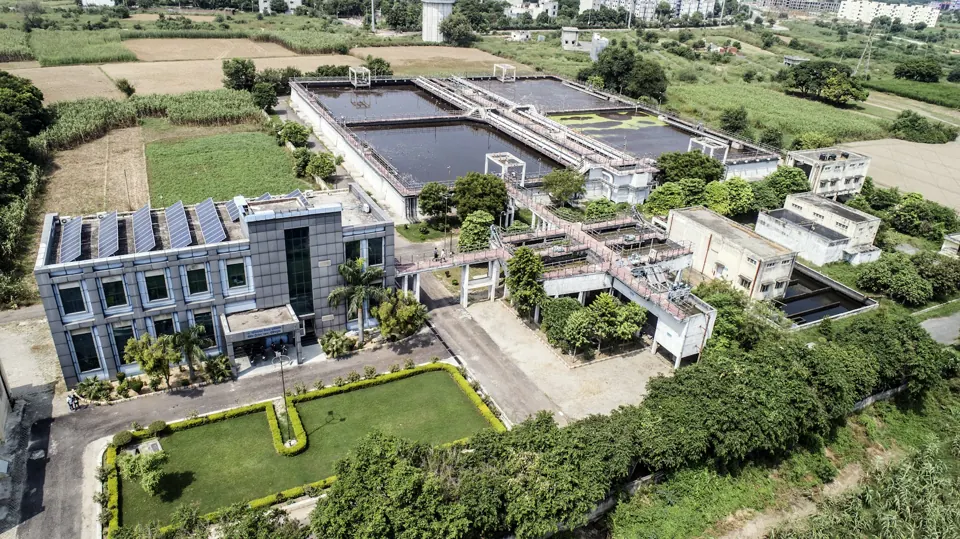
Aerial view of sewage treatment basins and surrounding facilities · Illustrative photography Subhash Chand · Unsplash License. Illustrative infrastructure; no client relationship or endorsement is implied. Image source and credit ↗ · License ↗.
Reviewed November 3, 2026. Requirements and project status can change. Confirm current applicability and complete policy wording before relying on this material.