
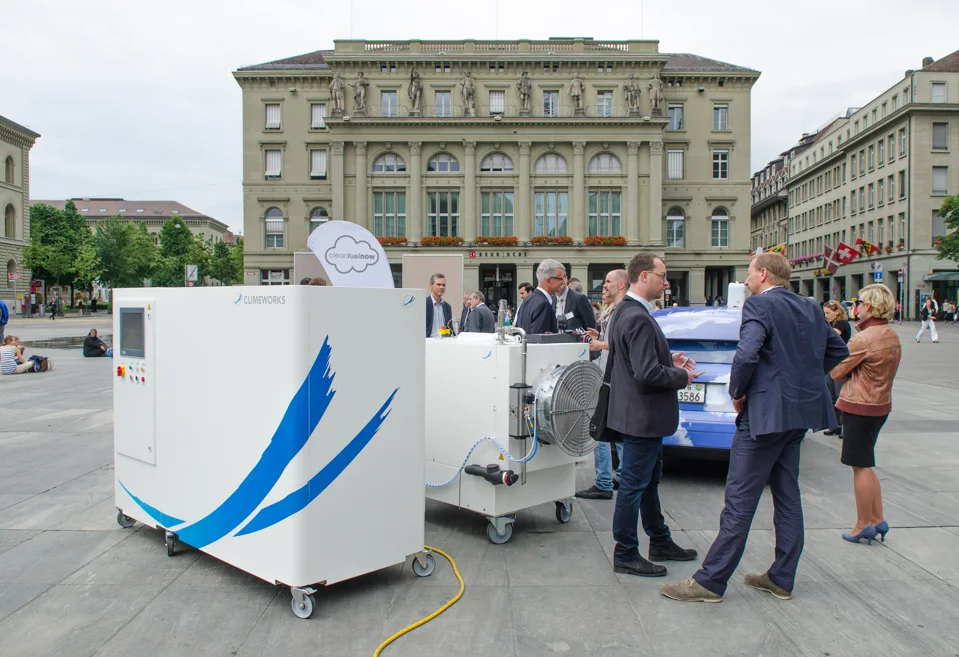
FOR DAC developers, technology owners, project investors and EPC teams
Define the project beyond its carbon-removal label
Direct air capture removes carbon dioxide from ambient air; it differs from capturing a concentrated industrial exhaust stream. Describe the selected technology, air-contacting equipment, sorbents or solvents, regeneration system, energy supply and compression arrangements. Distinguish laboratory development, demonstration and commercial operation when presenting the technology to insurers.
Identify the entity that owns the physical plant, the entity providing technology and the party selling removal services. Those roles may carry different obligations. A project may depend on another company for transport or permanent storage even though the commercial contract promises a complete removal outcome. Map those dependencies rather than describing the capture unit as the entire insured business.
Separate damage from inadequate capture performance
An illustrative loss could involve an equipment fire that damages an air-contacting module and delays deliveries under a removal agreement. Evaluate the damaged property, repair costs and revenue interruption under their respective terms. The investigation may also identify a design defect, premature material deterioration or an operating error; those causes can lead to different coverage questions.
Failure to achieve a projected capture rate, energy efficiency or cost target is a different issue from insured accidental damage. Technology warranties and output guarantees should be reviewed as commercial risk allocations, not substitutes for property insurance. Ask about prototype, testing, defect and machinery exclusions and identify the evidence needed to distinguish a covered event from normal technology development.
Review the chain from capture to claimed removal
Capture, transport, injection and monitoring may be performed by separate organizations. Review contracts for title to the carbon dioxide, quality specifications, delivery interruptions, storage failure and invalidated environmental attributes. A policy covering physical plant damage does not necessarily reimburse a buyer when credits are disputed or a permanence obligation is not met.
Professional liability may warrant review for engineering, verification or advisory services, while pollution and operational liability address different allegations. Determine whether the insured is merely purchasing storage services or holds an interest in the storage operation itself. In the United States, Class VI injection-well requirements are a distinct regulatory framework; they do not constitute insurance approval for the upstream capture plant.
Use evidence that distinguishes uncertainty from controls
Provide the technology's operating history, scale-up assumptions, maintenance plan and replacement strategy for specialized components. Include process diagrams, fire and emergency arrangements, site values and the schedule for testing and commercial acceptance. Explain common dependencies on electricity, heat, water, transport and storage providers.
The financial submission should separate physical production revenue, environmental attributes and contractual performance obligations. Identify termination rights, make-good provisions and uninsured contingencies before committing to a revenue forecast. Review the insurance program at material changes in technology or capacity, and document unresolved questions explicitly. That approach supports a realistic placement discussion without implying that insurance guarantees technology performance, carbon-credit eligibility or investment returns.
Operational exposures & coverage review
These review points are educational interpretation, not promises of insurance coverage.
| Exposure | Insurance review |
|---|---|
| Technology scale-up | Distinguish accidental loss from unproven performance. |
| Storage dependency | Map transport and injection contracts beyond the capture plant. |
| Removal commitments | Identify credit invalidation and make-good obligations. |
Questions for your next review
- Who promises permanent removal to the customer?
- Which technology and testing exclusions apply?
- How are storage-provider failure and credit disputes addressed contractually?
Connect this topic to your program
Bring the operational details above into a coordinated review of your contracts, loss history and actual policy wording. Explore Montridge infrastructure engineering insurance services for the related brokerage service.
Source references
Primary-source background informs the technical discussion. Insurance review questions are educational interpretation; a source link does not establish coverage or certify compliance.
Direct air capture is one approach to atmospheric carbon dioxide removal.
Scope: U.S. DOE technical background · Source reviewed 2026-11-01
Class VI geologic-sequestration requirements address drinking-water protection, monitoring and financial responsibility.
Scope: U.S. federal UIC framework; permitting authority varies · Source reviewed 2026-11-01
Prepared November 1, 2026. Confirm current requirements and their application to your work before relying on them. Specific insurance outcomes require review of the complete policy and endorsements.