
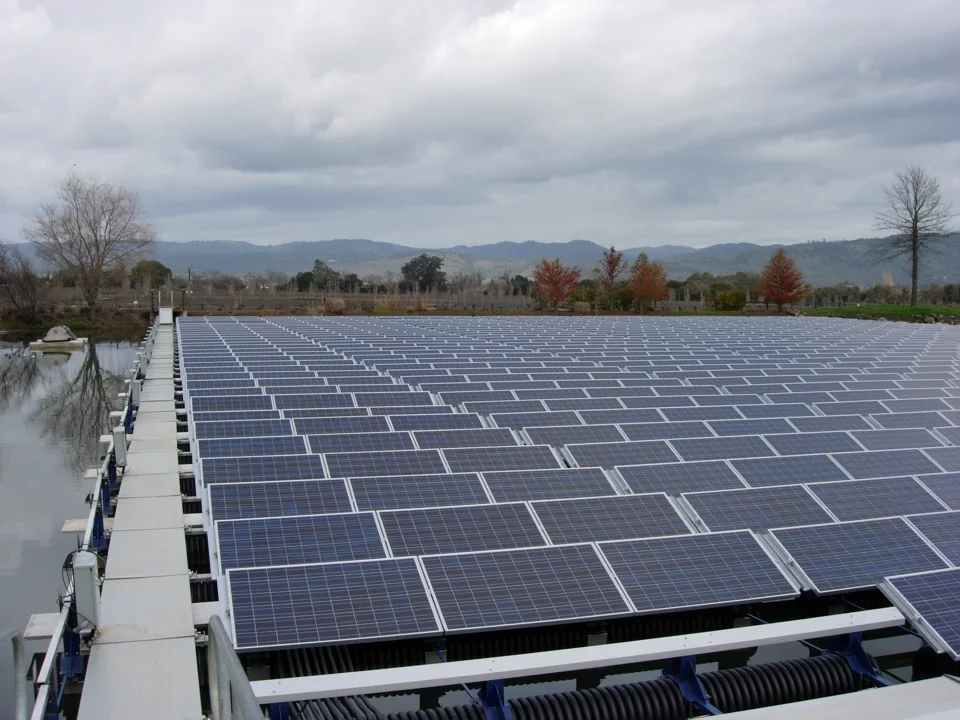
FOR Floating solar developers, reservoir owners and project operators
The supporting system is part of the insured asset
Floating solar involves more than panels moved from land to water. Floats, connectors, moorings, anchors, walkways and electrical connections form a system that must be described together. Idaho National Laboratory identifies reservoir-specific technical and environmental questions in evaluating floating photovoltaics. Insurance review should use the actual site design, not assume every water body creates the same exposure.
Identify the owner of the reservoir and the rights granted to the solar project. Water-level changes, operational drawdown and competing uses may affect access or equipment. Record which party maintains the supporting system and which activities the reservoir owner can undertake without the project operator’s approval.
Review movement, weather and electrical damage
A mooring failure can allow sections of an array to move, damage neighboring equipment or obstruct another reservoir activity. Review the policy description of floats and anchors, catastrophe terms, water-related exclusions and treatment of defective design or workmanship. Coverage for panels alone may not resolve the cost of recovering or rebuilding their support system.
Electrical equipment close to water requires an accurate installation description and qualified technical assessment. For insurance purposes, distinguish accidental damage from corrosion, deterioration and expected maintenance. Ask how resulting damage is treated if a failed component affects multiple array sections. Avoid assuming a land-based solar wording addresses every floating structure or marine exposure without modification.
Water access shapes the loss and the repair
Recovery may require boats, specialized lifting, divers or temporary work platforms. The operator’s plan should identify available resources, access restrictions and the authority to use the reservoir during repairs. Costs may include recovering displaced material and protecting other users, not merely replacing damaged photovoltaic modules.
Review liability for bodily injury, damage to third-party property and any pollution allegations. If vessels or diving contractors are involved, evaluate their actual operations and applicable marine insurance and employment arrangements. Do not infer maritime statutory status from the presence of water alone. The site’s location, work and personnel facts require a specific review by appropriate advisers.
Coordinate reservoir and energy contracts
Provide design drawings, anchoring information, water-level assumptions, inspection plans and agreements with the reservoir owner. Explain whether the installation shares electrical infrastructure or operating access with a hydroelectric facility. A common connection can create a wider interruption exposure than the floating array’s standalone value suggests.
The income analysis should distinguish insured damage from low irradiance, planned reservoir operations or contractual restrictions on output. Review responsibility for removing the array at the end of the agreement and for emergency relocation. A clear interface schedule helps the developer, reservoir owner and insurers understand which losses belong to the solar operation and which remain outside its insurance program. Document the agreed reservoir-access limits.
Operational exposures & coverage review
These review points are educational interpretation, not promises of insurance coverage.
| Exposure | Insurance review |
|---|---|
| Mooring or float failure | Review support-system damage and recovery costs. |
| Reservoir operation | Document water-level rights and access dependencies. |
| Water-based contractors | Evaluate vessel, diving and employment exposures separately. |
Questions for your next review
- Are floats, moorings and anchors expressly described?
- Who controls water levels and repair access?
- Does the recovery plan address specialized water-based work?
Related Montridge webinars
Utility-scale solar risks; floating-system and water exposures require additional review.
Renewables and battery storage
The Biggest Risks Facing Utility-Scale Solar Projects (And How to Manage Them)
Clicking Load video connects to YouTube. No player loads automatically.
Watch on YouTube ↗Connect this topic to your program
Bring the operational details above into a coordinated review of your contracts, loss history and actual policy wording. Explore Montridge renewable energy contractor insurance services for the related brokerage service.
Source references
Primary-source background informs the technical discussion. Insurance review questions are educational interpretation; a source link does not establish coverage or certify compliance.
Floating PV introduces reservoir-specific technical and environmental considerations.
Scope: United States; technical background and applicable federal framework · Source reviewed 2026-11-01
PV operations require maintenance, performance monitoring and a post-damage recovery plan.
Scope: United States; technical background and applicable federal framework · Source reviewed 2026-11-01
Prepared November 1, 2026. Confirm current requirements and their application to your work before relying on them. Specific insurance outcomes require review of the complete policy and endorsements.