FOR Microgrid developers, industrial owners and system integrators
Define the integrated system
A microgrid may combine generation, storage, switching and controls to serve a defined group of loads. DOE explains that solar resilience depends on the system configuration and ability to operate when grid power is unavailable. Do not assume that installing solar alone creates backup power. Identify which assets are owned by the customer, developer, utility or service provider. Record the control boundary, interconnection point and responsibility for islanding and reconnection as established by qualified engineering and the applicable agreements.
Review component and integration risk
A battery, generator, inverter or control failure may affect the entire system even if only one component is damaged. Review property, breakdown and interruption terms against the integrated configuration. Determine who accepts design and performance responsibility and whether professional liability definitions match the integrator’s work. Installation and testing coverage should be reviewed before commissioning. Warranties for individual components may not address a system-level compatibility problem; compare remedies carefully rather than assuming the equipment suppliers collectively guarantee the microgrid’s operation.
Distinguish resilience promises from insurance
An energy-as-a-service or resilience contract may promise availability, savings or continuity for critical loads. Those commitments can exceed insurance that requires physical damage or a covered liability claim. Review service credits, liquidated damages and consequential loss provisions. Identify the customer’s dependence on power for refrigeration, production, communications or other critical processes. Cyber review should address remote control, vendor access and data handling, while recognizing that cyber and property policies may divide physical consequences differently.
Consider a customer facility that remains undamaged but loses power because a microgrid control component fails. Identify the failed asset, the service provider’s contractual obligation and the customer’s resulting loss. Ask which policies require physical damage, which address a covered professional allegation and which exclude a performance promise. This is an illustrative review scenario rather than a coverage determination. The exercise can help align the sales description of resilience with the technical design, contract language and retained financial exposure.
Prepare the system review
Provide an asset ownership map, equipment list, engineering and commissioning records, control-service agreements, maintenance arrangements and representative customer contracts. Include the revenue model and realistic recovery sequence after failure. Record responsibility for fuel supply, battery replacement and software support. Review the transition from installation to operational service and the effect of later system changes. A focused insurance consultation should identify the difference between what the system is designed to do, what the contract promises and what the proposed insurance actually addresses. Include later software changes and equipment additions in the change-management and insurance review process.
Questions for your next review
- Who bears system integration and control responsibility?
- Which resilience promises exceed the policy’s loss trigger?
- How is ownership allocated across generation, storage and switching equipment?
Related Montridge webinars
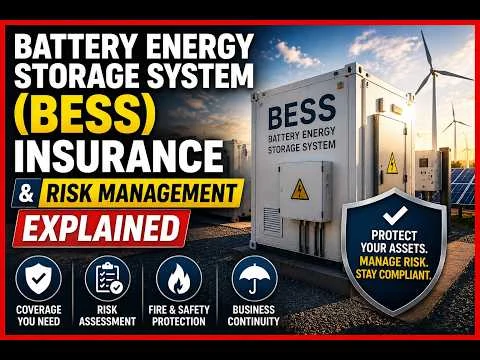
Renewables and battery storage
Battery Energy Storage System (BESS) Insurance & Risk Management Explained
Clicking Load video connects to YouTube. No player loads automatically.
Watch on YouTube ↗Connect this topic to your program
Bring the operational details above into a coordinated review of your contracts, loss history and actual policy wording. Explore Montridge power & utility contractor insurance services for the related brokerage service.
Source references
Primary-source background informs the technical discussion. Insurance review questions are educational interpretation; a source link does not establish coverage or certify compliance.
Prepared November 1, 2026. Confirm current requirements and their application to your work before relying on them. Specific insurance outcomes require review of the complete policy and endorsements.