
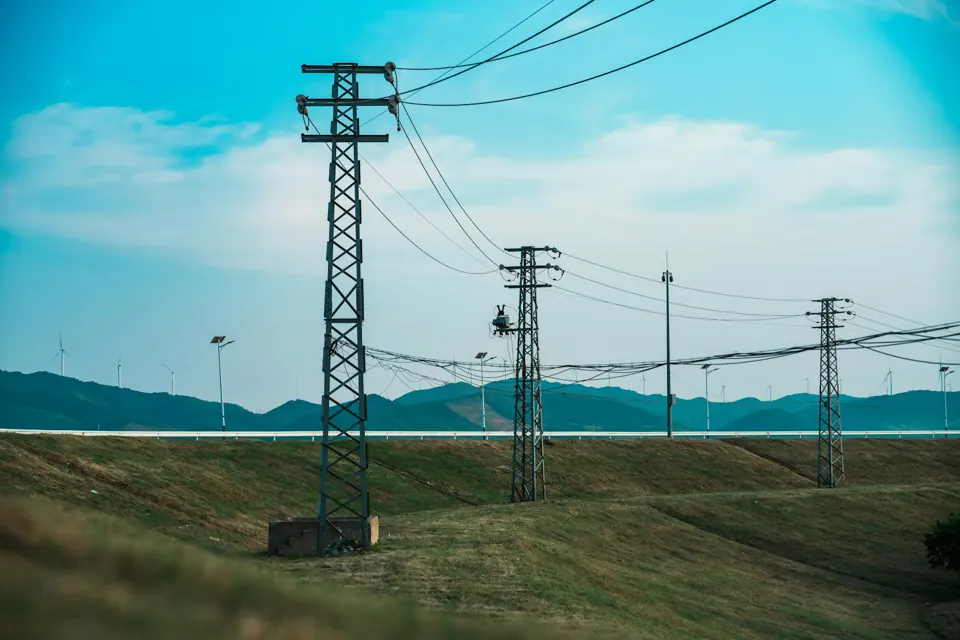
FOR Transmission line contractors, tower erectors and heavy civil firms
Specify voltage and work methods
Describe new construction, reconductoring, inspection and maintenance separately. Identify voltage ranges, energized and de-energized work, tower erection, helicopter support if used, and the role of subcontractors. OSHA’s electric-power resources distinguish operational and construction considerations; applicability depends on the actual work. Do not describe a transmission contractor merely as an electrical contractor. Underwriters need to understand the methods, terrain, equipment and work under the contractor’s control, including remote sites and access through land owned by others.
Examine a high-consequence work event
A conductor-handling incident, tower failure or crane loss can affect workers, existing lines, roads and third-party property. Review general liability, installation coverage, equipment insurance and umbrella terms against the work scenario. Ask how the program treats property being worked on, energized operations and damage to existing utility infrastructure. Identify responsibility for rigging, engineered lifts and temporary works. Policy limits should be considered alongside exclusions and sublimits; a large excess limit may not restore protection excluded from the underlying program.
Review project allocation and access
Transmission projects can involve multiple owners, utilities and prime contractors. Compare indemnity, additional insured, waiver and primary insurance requirements with the policies and endorsements actually available. Review easement-related restoration obligations and damage to crops, roads or land separately from ordinary third-party liability. Contract penalties, project completion commitments and outage-window obligations may not be insured. Where a wrap-up or owner-controlled program applies, determine enrollment, exclusions and the contractor’s remaining exposures before assuming the project program replaces its own coverage.
For example, reconductoring an existing line may involve both new materials and utility property already in service. Identify which party owns each item during the work and which policy is intended to address accidental damage. Include temporary supports, rented equipment and materials held at a staging location. Review how a delay in returning the line to service is allocated under the agreement. This project-level exercise can reveal exposures that are not apparent from annual revenue or payroll figures alone.
Provide evidence that supports the operation
Include project lists, voltage and work-method descriptions, safety procedures, vehicle and equipment schedules, claims history and subcontractor controls. Provide records showing how utility coordination, clearance and grounding responsibilities are assigned. Qualified personnel must determine the applicable safe-work procedures. Identify long-distance mobilization and temporary storage of conductor or structures. Review testing and acceptance responsibilities at project completion. A focused consultation should reconcile the declared operations with the contracts and policy wording before a new transmission scope begins. Identify responsibility for temporary line protection, site access and materials left in the field between construction shifts.
Questions for your next review
- Has the insurer reviewed the voltage ranges and energized work methods?
- Who bears damage to existing utility property during construction?
- What remains outside the project’s wrap-up or owner program?
Related Montridge webinars
EPC, contracts and commercial coverage
Utilities Construction Risk Management: Protecting Infrastructure Projects
Clicking Load video connects to YouTube. No player loads automatically.
Watch on YouTube ↗
Energy operations
Utility Contractor Insurance Requirements Checklist | Protect Your Projects & Contracts
Clicking Load video connects to YouTube. No player loads automatically.
Watch on YouTube ↗Connect this topic to your program
Bring the operational details above into a coordinated review of your contracts, loss history and actual policy wording. Explore Montridge power & utility contractor insurance services for the related brokerage service.
Source references
Primary-source background informs the technical discussion. Insurance review questions are educational interpretation; a source link does not establish coverage or certify compliance.
Prepared November 1, 2026. Confirm current requirements and their application to your work before relying on them. Specific insurance outcomes require review of the complete policy and endorsements.