FOR HDD contractors, pipeline constructors and project owners
Describe the crossing and the design responsibility
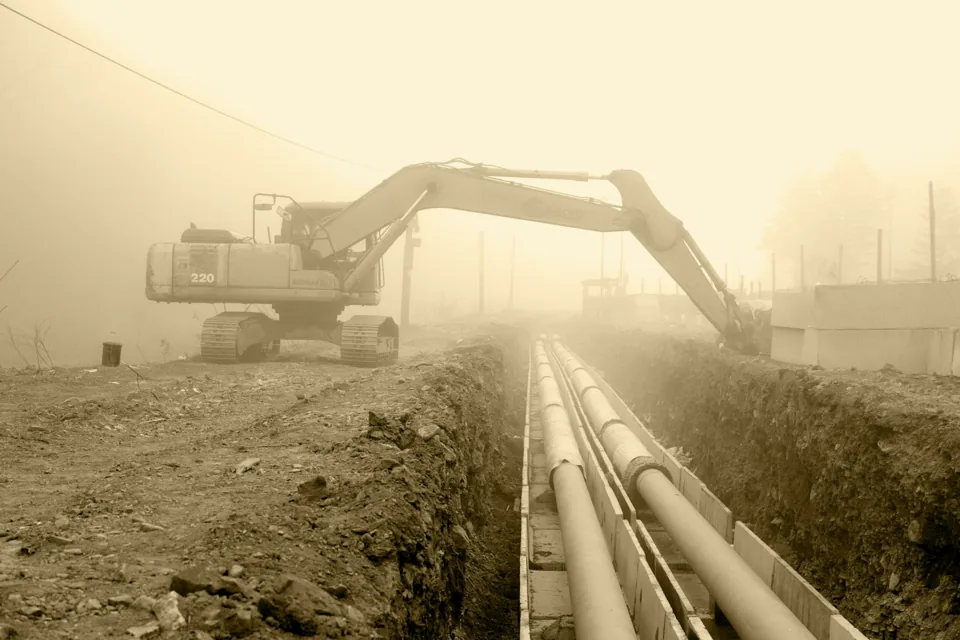
Horizontal directional boring installs pipe or conduit beneath obstacles without a continuous open trench. The submission should identify the product, crossing length, ground conditions, nearby utilities and sensitive receptors. A highway crossing, a developed urban corridor and a waterway crossing should not be presented as interchangeable jobs.
Clarify who designs the bore path, supplies geotechnical information, locates existing utilities and approves deviations. This service is distinct from directional drilling of a production well. OSHA’s utility-avoidance bulletin highlights the limited visibility of trenchless work; applicable locate, excavation and environmental requirements still require a project- and jurisdiction-specific review.
Test utility damage and drilling-fluid scenarios separately
A bore striking an existing gas or electric line can create injury, property damage and interruption claims beyond the immediate worksite. An unintended return of drilling fluid may instead create cleanup and restoration costs, particularly near a waterway. Review general liability and contractors pollution against both scenarios rather than assuming one policy handles all underground incidents.
Examine underground-property restrictions, pollution definitions, damage to the work and any limitation connected to the contractor’s professional design role. Ask whether cleanup of drilling fluid is treated differently from other pollutants. A requirement to restore the crossing or repeat a failed bore may remain a contractual performance obligation rather than an insured liability claim.
Account for the pipe, tools and installation stage
The owner may supply pipe while the boring contractor provides the rig, tracking equipment and downhole assembly. Identify custody and risk of loss during staging, pullback and final acceptance. A damaged section may require retrieval and a replacement crossing, producing costs well beyond the material’s purchase price.
Review contractor equipment, installation coverage and project builders risk for these stages. Confirm how stuck tools, drilling rods, collapse, defects and testing are treated. Do not assume that an owner’s project policy covers the contractor’s tools or every attempt at installation. Contractual allocation should also explain who bears extra cost when subsurface conditions differ from the information supplied.
Provide evidence of crossing control
Underwriters benefit from project types, values, depth and length ranges, loss history and sample contracts. Explain utility verification, bore tracking, fluid management, escalation procedures and the qualifications of personnel supervising the work. Include the process for assessing conditions that make the planned method unsuitable. Document who can authorize a redesigned crossing or a change in installation method.
Preserve locate records, bore logs, ground information, fluid observations and change approvals after an incident. Identify which party must notify landowners, regulators and insurers, while avoiding admissions or commitments beyond authorized responsibilities. Before accepting a particularly sensitive crossing, review its specific insurance requirements and exclusions. A generic construction certificate should not be treated as an adequate answer to an unusual underground or environmental exposure.
Operational exposures & coverage review
These review points are educational interpretation, not promises of insurance coverage.
| Exposure | Insurance review |
|---|---|
| Utility strike | Examine underground-property terms and locating evidence. |
| Fluid return | Review pollution definitions and restoration obligations. |
| Failed pullback | Separate product pipe, tools and repeat-work costs. |
Questions for your next review
- Who owns the bore design and ground assumptions?
- Are drilling-fluid cleanup costs specifically addressed?
- When does risk of loss for the installed pipe transfer?
Related Montridge webinars
Subcontractor insurance review at the boring/pipeline interface.

EPC, contracts and commercial coverage
Subcontractor Insurance Checklist for Contractors and Business Owners
Clicking Load video connects to YouTube. No player loads automatically.
Watch on YouTube ↗Connect this topic to your program
Bring the operational details above into a coordinated review of your contracts, loss history and actual policy wording. Explore Montridge EPC insurance services for the related brokerage service.
Source references
Primary-source background informs the technical discussion. Insurance review questions are educational interpretation; a source link does not establish coverage or certify compliance.
OSHA’s March 13, 2018 advisory bulletin describes trenchless utility installation, limited visibility and utility-strike hazards.
Scope: United States; advisory bulletin, current local rules require separate review · Source reviewed 2026-11-01
PHMSA describes facility and construction inspection subjects, including welding, testing and LNG operations.
Scope: United States; applicable federal/state pipeline and LNG jurisdiction · Source reviewed 2026-11-01
Prepared November 1, 2026. Confirm current requirements and their application to your work before relying on them. Specific insurance outcomes require review of the complete policy and endorsements.