
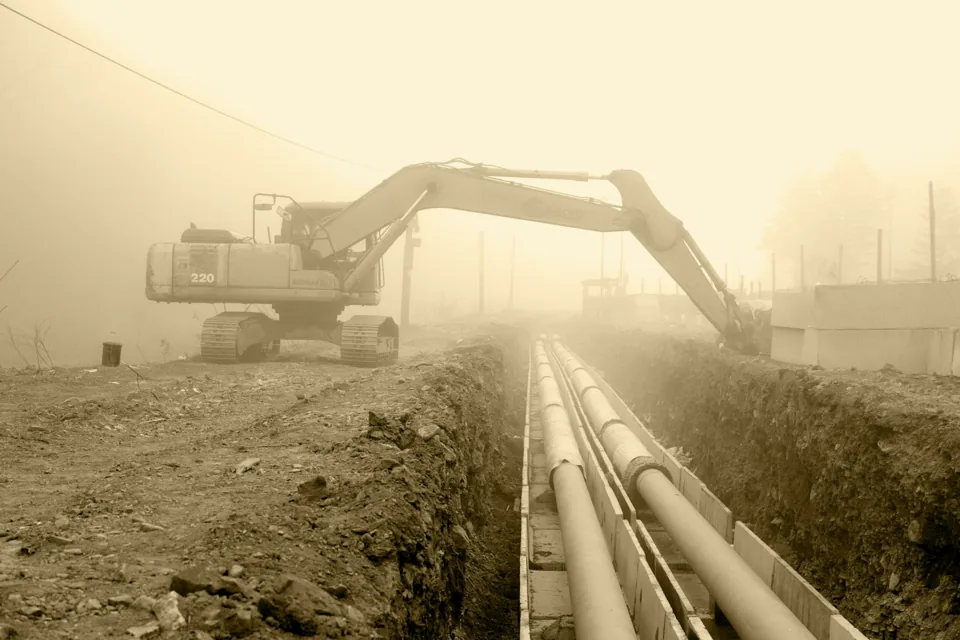
FOR Pipeline EPC contractors, project owners, welding firms and testing specialists
Disclose the intended service and project interfaces
A pipeline built for carbon dioxide service should not be described simply as ordinary utility construction. Explain the transported stream, intended operating conditions, materials, route and connections to capture or injection facilities. Identify design responsibility for compatibility, pressure control and the interface with existing infrastructure.
PHMSA publishes guidance concerning carbon dioxide pipelines, but the applicable U.S. requirements must be determined for the actual system and jurisdiction. A proposed rule or guidance document should not be represented as a universally effective construction rule. Obtain a project-specific regulatory assessment from qualified advisers. The insurance submission should describe the work and approvals accurately without claiming that an insurance policy establishes compliance.
Follow defects from fabrication to commissioning
Review procurement, welding, coating, examination, testing and reinstatement as distinct stages. An illustrative failure could involve a defective joint discovered during pressure testing, followed by damage to surrounding work and a delay in completing a critical tie-in. Separate the cost of correcting the joint from resulting damage and consequential delay.
Builders risk, installation coverage and contractor liability may treat those costs differently. Ask about testing conditions, underground works, defective workmanship, existing property and damage to property being worked on. Where a contractor performs design or engineering, evaluate professional liability independently. An inspection certificate is useful evidence, but it neither guarantees that a defect will be discovered nor establishes an insurer's obligation to pay.
Plan for a release during tie-in or early service
The construction contractor's responsibility may continue while part of the line is energized or connected to an operating system. Describe who controls valves, authorizes changes and directs emergency action. A release can create worker and public-safety consequences even when the transported material is not a combustible fuel.
Review pollution definitions and exclusions for the actual carbon dioxide stream, including relevant constituents, rather than assuming a conventional oil-spill endorsement fits. Examine transportation, off-site migration, emergency costs and contractual indemnities. Responsibility for the owner's lost throughput may differ from responsibility for bodily injury or physical damage. Early use, partial acceptance and completed-operations provisions require coordinated review before the first operational transfer.
Prepare a defensible handover record
Provide route maps, construction methods, contract allocations, quality records, testing plans and the value of completed work by segment. Identify critical equipment and the practical cost of reopening rights of way or remobilizing specialist crews. Include the process for recording deviations and obtaining acceptance of corrective work.
At handover, retain traceable materials and inspection records, operating limits and the list of outstanding obligations. Confirm the transition between construction insurance and the owner's operational program without assuming a signed completion document automatically ends every contractor exposure. Review the duration of completed-operations protection and reporting arrangements for later allegations, especially where contractors demobilize or a project entity is dissolved after construction.
Operational exposures & coverage review
These review points are educational interpretation, not promises of insurance coverage.
| Exposure | Insurance review |
|---|---|
| Testing failure | Separate repair of defective work from resulting damage. |
| Early service | Clarify control and insurance before partial commissioning. |
| Release consequences | Review CO₂-specific definitions and emergency liabilities. |
Questions for your next review
- Are the intended stream and operating conditions disclosed?
- Who controls tie-ins and first operational transfer?
- What records survive demobilization for a later defect allegation?
Related Montridge webinars
Contractual allocation on EPC pipeline construction.
EPC, contracts and commercial coverage
Contractual Risk Transfer for EPC Projects
Clicking Load video connects to YouTube. No player loads automatically.
Watch on YouTube ↗Connect this topic to your program
Bring the operational details above into a coordinated review of your contracts, loss history and actual policy wording. Explore Montridge EPC insurance services for the related brokerage service.
Source references
Primary-source background informs the technical discussion. Insurance review questions are educational interpretation; a source link does not establish coverage or certify compliance.
PHMSA guidance includes carbon-dioxide pipeline policy; applicable rules must be identified by fluid, phase and jurisdiction.
Scope: U.S. pipeline safety · Source reviewed 2026-11-01
Class VI geologic-sequestration requirements address drinking-water protection, monitoring and financial responsibility.
Scope: U.S. federal UIC framework; permitting authority varies · Source reviewed 2026-11-01
Prepared November 1, 2026. Confirm current requirements and their application to your work before relying on them. Specific insurance outcomes require review of the complete policy and endorsements.